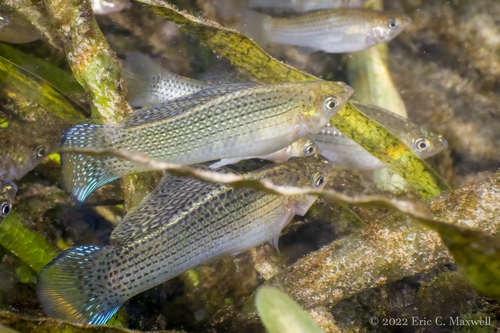
Sailfin Molly
Poecilia latipinna
Boasting a magnificent dorsal fin that rivals the beauty of any tropical reef fish, the Sailfin Molly is a coastal icon of the American Southeast. This hardy and social livebearer thrives where the river meets the sea, displaying a shimmering array of colors in the shallow sunlit waters.
Quick Identification
Size
2-6 inches (5-15 cm) in length; males are generally larger and more ornamental than females.
Colors
Olive to silvery-gray body with rows of dark spots; males feature iridescent blue, green, and gold highlights on their massive dorsal and tail fins.
Key Features
- Massive, sail-like dorsal fin in males
- Horizontal rows of dark spots along the body
- Upturned mouth designed for surface feeding
- Compressed, stocky body profile
When You’ll See Them
Geographic range
Where Does the Sailfin Molly Live?
The Sailfin Molly is native to the coastal lowlands of North America, with a primary range extending from North Carolina southward through the Florida peninsula and around the Gulf of Mexico to the Yucatán Peninsula in Mexico. These fish are true coastal specialists, rarely found more than a few miles inland unless following connected canal systems or river deltas. While they are a quintessential species of the American Southeast, introduced populations have established themselves in warm-water habitats across the globe, including parts of the Western United States and Southeast Asia.
Basemap © OpenStreetMap contributors
Behavior
Sailfin Mollies are highly social and energetic fish known for their remarkable adaptability to different salinity levels. As "livebearers," they do not lay eggs; instead, the females give birth to fully formed, swimming fry. This reproductive strategy allows them to quickly populate an area. They are often seen in loose schools, grazing on algae or darting near the water's surface to catch small insects.
The most striking behavior of the species is the courtship display of the male. To attract a mate, a male will fully erect his enormous dorsal fin, creating a shimmering "sail" that displays his health and dominance. While generally peaceful, males will engage in non-contact sparring matches, circling each other with their fins flared to defend their territory or access to females.
EverydayEarth exclusive
Camera Tips
To capture high-quality footage of Sailfin Mollies, you will need an underwater action camera or a specialized backyard pond camera. Because these fish inhabit shallow margins, you can often mount your camera on a short, weighted tripod and submerge it just 6 to 12 inches deep near the edge of a canal or salt marsh. Position the lens toward a patch of submerged vegetation or an algae-covered rock, as these are natural gathering spots for grazing.
Water clarity is your biggest hurdle. In brackish environments, sediment can easily blur the shot. Try to film on a clear, sunny day after a period of calm weather when the water has settled. Positioning your camera so the sun is behind it will help illuminate the iridescent scales and vibrant colors of the male's fin. If the water is very shallow, you might experience surface glare; using a polarized filter on your lens can significantly improve the view from just beneath the surface.
Mollies are naturally curious and can be lured into the frame quite easily. Dropping a small algae wafer or a tiny amount of sinking fish food directly in front of the lens will usually attract a school within minutes. For the best cinematic results, use a high frame rate setting (like 60 or 120 fps). This allows you to slow down the footage in post-production, highlighting the incredible moment a male flares his sail-like fin in a display of shimmering brilliance.
Similar Species
Species that look similar or are commonly confused with Sailfin Molly.
Frequently Asked Questions
Record Sailfin Molly at your habitat
Connect a camera to start building your own species record — AI identifies every visitor automatically.