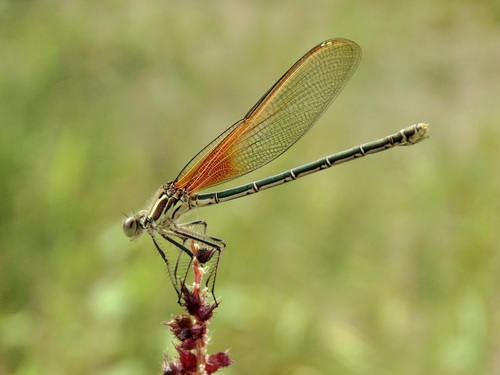
American Rubyspot
Hetaerina americana
With wings tipped in shimmering crimson and a body of polished emerald, the American Rubyspot is the crown jewel of North American waterways. Watch for its graceful, fluttering flight along sun-drenched riverbanks and garden streams.
Quick Identification
Size
Length 3.6 to 5.2 cm (1.4–2.0 in); Wingspan approximately 5 to 7.5 cm (2–3 in)
Colors
Males feature brilliant ruby-red patches at the wing bases and a lustrous red head/thorax; both sexes have a metallic emerald green abdomen; females have amber-tinted wing bases.
Key Features
- Vibrant red patches at the base of the wings in males
- Iridescent metallic green abdomen on both sexes
- Broad wings with complex veining patterns
- Distinctive perching posture on riverside rocks or vegetation
When You’ll See Them
Geographic range
Where Does the American Rubyspot Live?
Native to the North American continent, the American Rubyspot boasts an expansive range that stretches from southern Canada throughout almost the entire contiguous United States. It continues southward through Mexico and into parts of Central America, reaching as far south as Honduras. These damselflies are highly adaptable but remain strictly tied to permanent moving water sources across these varied landscapes.
Basemap © OpenStreetMap contributors
Behavior
The American Rubyspot is a highly active and territorial damselfly commonly found near moving water. Unlike many other damselflies that prefer the stillness of ponds, this species is a specialist of streams and rivers. Males are known for their aggressive defense of perching sites, often engaging in rapid, spiraling aerial dogfights with rivals to secure the best spots for attracting females. Their flight is more rhythmic and fluttering than the darting motion of dragonflies, occasionally appearing butterfly-like as they patrol the shoreline.
These insects spend a significant portion of their day 'sallying' from a chosen perch—meaning they fly out to snatch a small insect from the air and immediately return to the same spot to consume it. They are diurnal and rely heavily on the sun's warmth to maintain the energy levels required for their high-speed territorial displays. During the heat of the day, you may see them 'obelisking,' or raising their abdomens toward the sun to regulate their body temperature.
EverydayEarth exclusive
Camera Tips
Capturing the American Rubyspot on camera requires focusing on their predictable perching habits. These damselflies are creatures of habit and will often return to the exact same twig, reed, or rock after a hunting flight. To get a high-quality shot, identify a prominent piece of vegetation overhanging a sunlit stream and position your camera on a tripod or mount just 18 to 24 inches away. Using a macro lens or a camera with a close-focusing AI sensor is essential for capturing the metallic texture of their bodies.
Lighting is the most critical factor for this species. To make the 'ruby' spots pop and the green abdomen shine, aim to have the sun at your back or at a 45-degree angle to the subject. Mid-day light, which is usually avoided in landscape photography, is actually ideal here because it activates the insect's iridescence. If your camera allows for manual shutter speed, set it to at least 1/1000th of a second to freeze the motion of their wings, which beat even while they are temporarily perched.
For backyard enthusiasts, you can 'bait' these insects into view by providing the ideal habitat. If you have a water feature with a pump or fountain that creates movement, place a few tall, slender bamboo stakes or native grasses near the splashing water. The American Rubyspot will use these as lookout towers. Configure your AI camera's motion sensitivity to high, as the small profile of a damselfly can sometimes be ignored by sensors calibrated for larger mammals or birds.
Similar Species
Species that look similar or are commonly confused with American Rubyspot.
Frequently Asked Questions
Record American Rubyspot at your habitat
Connect a camera to start building your own species record — AI identifies every visitor automatically.