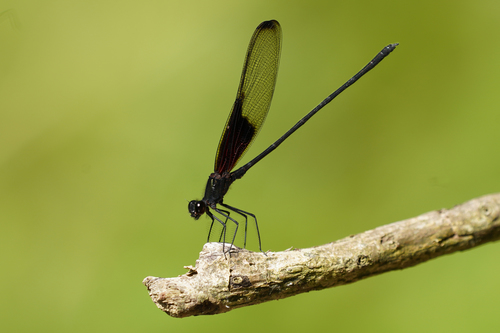
Smoky Rubyspot
Hetaerina titia
The Smoky Rubyspot is a gothic beauty of the waterways, sporting dramatic dark-stained wings and brilliant crimson accents. A favorite of backyard naturalists near streams, this damselfly brings a touch of elegant mystery to the summer riverbank.
Quick Identification
Size
Length: 40–52 mm (1.6–2.0 in); Wingspan: 50–65 mm (2.0–2.5 in)
Colors
Males have deep red spots at the base of the wings with variable smoky black patches on the tips. Females are metallic green or bronze with clear or amber wings and white wing spots.
Key Features
- Blood-red spots at the base of the forewings (males)
- Extensive smoky-brown or black pigmentation on the wing tips
- Slender, metallic body with a delicate frame
- White pterostigmas (wing spots) visible on females
When You’ll See Them
Behavior
The Smoky Rubyspot is a masterpiece of the riverbank, known for its elegant, fluttering flight that distinguishes it from the more erratic darting of common dragonflies. Unlike many other damselflies that prefer stagnant ponds, the Smoky Rubyspot is a creature of moving water. Males are highly territorial and can often be seen engaging in aerial 'dogfights' with rivals, spiraling upward in a flash of red and black to defend their preferred perching spot on an overhanging branch or reed.
These damselflies spend the majority of their day perching on vegetation near the water's edge, waiting for small flying insects to pass by. They are sit-and-wait predators, launching brief, acrobatic sorties to snag prey in mid-air before returning to the same twig. While they are wary of sudden movements, they are relatively approachable for patient observers and photographers, especially during the heat of the afternoon when they are most active.
EverydayEarth exclusive
Camera Tips
To capture the Smoky Rubyspot on an AI-powered camera, placement is everything. These insects are creatures of habit and will almost always return to the same 'sentinel' perch—usually a thin, sunlit twig or leaf overhanging moving water. Position your camera on a tripod or mount just 2–3 feet away from these prominent perches. If your camera allows for macro focus or has a dedicated 'small animal' AI trigger, this is the perfect time to use it. Angle the lens so the sun is behind or to the side of the subject; this 'backlighting' will make the red wing spots and smoky patches glow dramatically in your photos.
Since these damselflies are small and fast, standard motion triggers can sometimes be too slow. If your device supports it, use a high-frame-rate video mode or a 'pre-roll' feature that captures a few seconds before the trigger event. This ensures you catch the moment they launch into flight or land. Because they are most active in full sun, ensure your exposure settings are adjusted to prevent the metallic body from 'blowing out' or reflecting too much glare. A circular polarizer filter can be a game-changer here to manage reflections from the water surface and the insect’s wings.
If you have a backyard stream or water feature, you can encourage them to land in front of your camera by providing 'natural' perches. Stick a few slender bamboo stakes or dried branches into the mud at the water's edge, angled 45 degrees over the flow. The Smoky Rubyspot prefers these higher vantage points to scan for prey. Once they accept a perch, they will return to it for hours, giving your camera plenty of opportunities to capture the perfect high-definition sequence.
Similar Species
Species that look similar or are commonly confused with Smoky Rubyspot.
Frequently Asked Questions
Record Smoky Rubyspot at your habitat
Connect a camera to start building your own species record — AI identifies every visitor automatically.