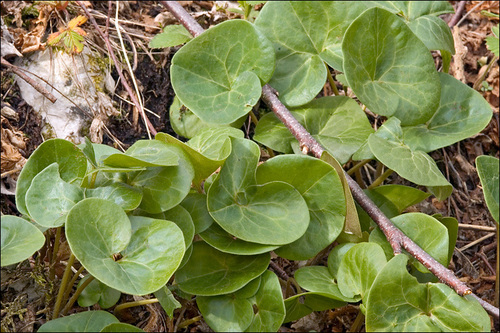
Asarabacca
Asarum europaeum
A hidden gem of the forest floor, Asarabacca is a prehistoric-looking evergreen known for its glossy, kidney-shaped leaves and 'secret' flowers that bloom beneath the soil surface.
Quick Identification
Size
Height 10-15 cm (4-6 in); leaves 5-10 cm (2-4 in) wide
Colors
Deep glossy green leaves; solitary, nodding brownish-purple or dull maroon flowers
Key Features
- Glossy kidney-shaped evergreen leaves
- Low-growing, creeping groundcover habit
- Bell-shaped purple flowers hidden beneath foliage
- Aromatic ginger-scented roots
When You’ll See Them
Geographic range
Where Does the Asarabacca Live?
Native to the temperate reaches of Europe, Asarabacca is a quintessential resident of the continent's ancient broadleaf forests. Its core range spans from the Atlantic coast of France through the dense woodlands of Germany and Poland, reaching as far east as the Ural Mountains in Russia and extending south into the mountainous regions of Italy and the Balkans. While primarily a European species, it has been introduced to parts of North America and the United Kingdom as a popular ornamental groundcover for shady gardens.
Basemap © OpenStreetMap contributors
Behavior
Asarabacca is a slow-growing, perennial groundcover that forms dense, lush mats across the forest floor. Unlike many woodland plants that reach upward for sunlight, this species has adapted to the deep shade of the understory, using its leathery, evergreen leaves to photosynthesize even in low-light conditions. It spreads primarily through a network of creeping rhizomes, which allow it to colonize large areas over several decades, often signifying ancient, undisturbed woodland.
One of its most fascinating biological behaviors is its pollination strategy. Because its flowers are produced at ground level and are often completely obscured by leaf litter, Asarabacca relies on crawling invertebrates rather than flying insects. Beetles, flies, and even slugs are attracted to the dark, fleshy flowers, which emit a subtle, musky odor. This low-profile existence protects the reproductive organs from harsh weather and keeps the plant's high-moisture needs stable within the humid microclimate of the soil surface.
EverydayEarth exclusive
Camera Tips
Capturing the subtle beauty of Asarabacca requires a different approach than filming mobile wildlife. Because this plant is very low to the ground, you must position your camera at a near-ground level. A 'turtle-view' angle is best—mount your camera on a small block or a low tripod just 2-3 inches above the soil. This perspective allows you to peer underneath the canopy of kidney-shaped leaves to find the elusive, bell-shaped purple flowers that bloom in early spring.
Since the flowers are often buried in leaf litter, you may need to gently clear a small window of debris in front of the lens to keep the subject in focus. Because Asarabacca thrives in deep shade, your camera’s light sensitivity is crucial. Use a camera with a high-quality sensor to avoid 'grainy' images in the dim forest understory. If your device has a macro setting, enable it; the intricate textures of the glossy leaves and the hairy stems of the flowers are spectacular when viewed up close.
For a truly unique project, set your camera to time-lapse mode during the months of March and April. By taking a photo every 30 minutes, you can capture the slow 'crawl' of the rhizomes or the nodding emergence of the flowers. This is also an excellent way to document the diverse micro-wildlife that visits the plant, such as forest beetles and slugs, which are the plant's primary pollinators. Ensure your camera housing is waterproof, as the damp, mossy environments where Asarabacca grows are prone to high humidity and ground-level condensation.
Similar Species
Species that look similar or are commonly confused with Asarabacca.
Frequently Asked Questions
Record Asarabacca at your habitat
Connect a camera to start building your own species record — AI identifies every visitor automatically.