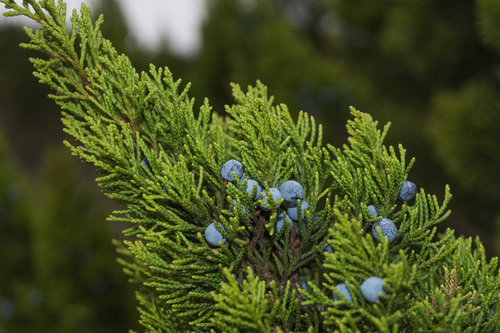
Ashe juniper
Juniperus ashei
The rugged backbone of the Texas Hill Country, the Ashe juniper is more than just a tree—it is a vital sanctuary for endangered birds and a master of drought survival.
Quick Identification
Size
Typically 6–10 metres (20–33 ft) tall, occasionally reaching 15 metres (49 ft) with a trunk diameter of 30–50 cm (12–20 in).
Colors
Dark green scale-like foliage; ash-gray to brown bark that shreds in long strips; female trees produce waxy, berry-like cones that are bright blue to glaucous purple.
Key Features
- Shredding, fibrous bark that peels in long thin strips
- Dark green, scale-like leaves that stay evergreen year-round
- Small, berry-like blue seed cones on female trees
- Commonly multi-trunked or low-branching growth habit
- Pungent, aromatic wood and foliage scent
When You’ll See Them
Geographic range
Where Does the Ashe juniper Live?
Native to the North American continent, the Ashe juniper is most prominently found across the south-central United States and northeastern Mexico. Its core population centers on the Edwards Plateau of central Texas, though its range extends northward into Oklahoma, Arkansas, and southern Missouri. This tree is a hallmark of the 'Hill Country' landscape, defining the rugged topography of the region.
Basemap © OpenStreetMap contributors
Behavior
Ashe juniper, colloquially known as 'Mountain Cedar' in the Texas Hill Country, is a foundational species for its ecosystem. Unlike many trees that remain dormant in winter, Ashe juniper is famously active during the coldest months. From December to February, male trees release vast clouds of orange-tinged pollen, which is a significant event for local weather patterns and human residents alike. The tree grows relatively slowly but is incredibly hardy, surviving intense droughts and poor, rocky limestone soils where other trees would fail.
This species acts as a critical 'nurse plant' and shelter provider. Its dense, evergreen canopy offers a thermal refuge for wildlife during both the blistering heat of Texas summers and the occasional winter freeze. For humans, the tree is a subject of both love and frustration; while it is often blamed for high water consumption and allergies, it is actually a vital component in preventing soil erosion on steep hillsides and providing the specific nesting material required by endangered local bird species.
EverydayEarth exclusive
Camera Tips
When using an AI-powered camera to capture wildlife around an Ashe juniper, the most important feature to focus on is the trunk of an older tree. The peeling, shaggy bark is the exclusive nesting material for the endangered Golden-cheeked Warbler. Position your camera at a height of 5 to 10 feet, angled toward a section of trunk with particularly loose, 'shreddy' bark during the spring nesting season (March to May) to catch these rare birds in action.
During the winter months, focus your lens on the berry-laden branches of female trees. The blue seed cones are a high-energy food source for a variety of birds, most notably Cedar Waxwings and American Robins. To capture these fast-moving flocks, use a high-speed trigger setting or a short video burst. Ensure the camera is positioned to avoid direct backlight from the low winter sun, which can wash out the deep blues of the berries.
Because the Ashe juniper provides dense ground-level cover, the 'skirt' of the tree is an excellent spot for trail cameras. Place your camera 12–18 inches off the ground near the base of a large juniper to capture the many mammals that use the canopy for thermal cover, such as white-tailed deer, raccoons, and gray foxes. The dense foliage often creates a natural funnel for animal movement, making it a reliable spot for year-round activity.
Similar Species
Species that look similar or are commonly confused with Ashe juniper.
Frequently Asked Questions
Record Ashe juniper at your habitat
Connect a camera to start building your own species record — AI identifies every visitor automatically.