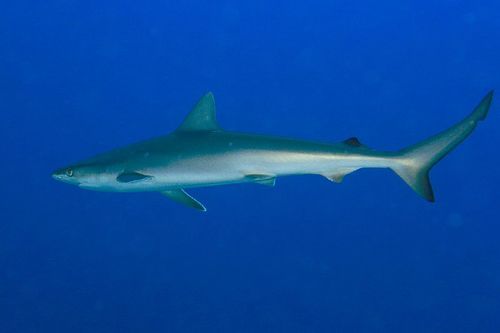
Atlantic Sharpnose Shark
Rhizoprionodon terraenovae
Streamlined and spirited, the Atlantic Sharpnose Shark is the quintessential coastal predator of the Western Atlantic. Its signature white-spotted flanks and agile hunting style make it a favorite for waterfront camera enthusiasts.
Quick Identification
Size
Typically 2.5 to 3.5 feet (75–105 cm) in length; maximum weight around 12–14 lbs (5.5–6.4 kg).
Colors
Olive-gray to brown on the back with a white underside. Adults often feature distinctive small white spots on their sides.
Key Features
- Long, flattened snout
- Small white spots along the flanks
- Labial furrows (grooves) at the corners of the mouth
- Black-edged dorsal and caudal fins
When You’ll See Them
Geographic range
Where Does the Atlantic Sharpnose Shark Live?
The Atlantic Sharpnose Shark is a native inhabitant of the Western Atlantic Ocean, primarily thriving along the subtropical and temperate coastlines of North America. Its core range spans from the Bay of Fundy in Canada, down the entire Eastern Seaboard of the United States, and throughout the Gulf of Mexico to the Yucatan Peninsula. While they are most abundant in the warm waters of the U.S. South and the Gulf, they are reliable seasonal visitors to Mid-Atlantic and New England estuaries during the peak of summer.
Basemap © OpenStreetMap contributors
Behavior
The Atlantic Sharpnose Shark is a highly energetic and social species, often found in large schools that are frequently segregated by both size and sex. Unlike some of their larger, more sluggish relatives, these sharks are constant movers, patrolling the surf zones and coastal estuaries in search of their next meal. They are known for their opportunistic feeding habits and can become quite bold when a food source is present, though they generally pose no threat to humans due to their small size.
These sharks exhibit a clear seasonal migration pattern, moving into deeper offshore waters during the winter months and returning to shallow coastal nurseries and beachfronts as the water warms in the spring. They are particularly fond of brackish environments and are common sights around fishing piers and ship channels, where they scavenge for scraps or hunt small schooling fish.
EverydayEarth exclusive
Camera Tips
Capturing the Atlantic Sharpnose Shark requires a specialized underwater setup, typically involving an action camera with a waterproof housing mounted to a pier piling, dock, or a weighted seabed tripod. Because these sharks frequent shallow coastal areas, you can often find success by placing your camera in 5 to 10 feet of water near structure. Wide-angle lenses are essential, as these sharks move quickly and can come quite close to the lens, making a broad field of view necessary to keep the entire animal in frame.
Water clarity is the biggest challenge for AI-powered marine cameras. For the best results, deploy your camera during a rising tide when clearer ocean water pushes into the estuaries. If you are using an AI-triggering system, ensure your camera is positioned to minimize 'false positives' from swaying seagrass or floating debris. Setting your camera to a higher frame rate (60fps or higher) will allow you to capture the fluid, serpentine movement of the shark without the motion blur common in underwater photography.
To reliably attract Atlantic Sharpnose Sharks to your 'backyard' dock camera, use a scent-based attractant. A perforated PVC pipe filled with oily fish scraps (like mackerel or sardines) acts as an excellent long-distance lure. Secure the bait box within the camera’s focal range, ideally 3-5 feet away. This not only brings the sharks into view but encourages them to linger, giving your AI software enough time to identify the species and record high-quality footage.
Lighting is another crucial factor. During the day, natural sunlight filtered through the water provides the most realistic colors, but these sharks are highly active at dusk and night. If your camera setup includes underwater LEDs, use red or low-intensity white light to avoid startling the sharks. Position the lights at an angle to the side of the camera rather than directly next to the lens to minimize 'backscatter'—the reflection of light off small particles in the water that can obscure the shark's features.
Similar Species
Species that look similar or are commonly confused with Atlantic Sharpnose Shark.
Frequently Asked Questions
Record Atlantic Sharpnose Shark at your habitat
Connect a camera to start building your own species record — AI identifies every visitor automatically.