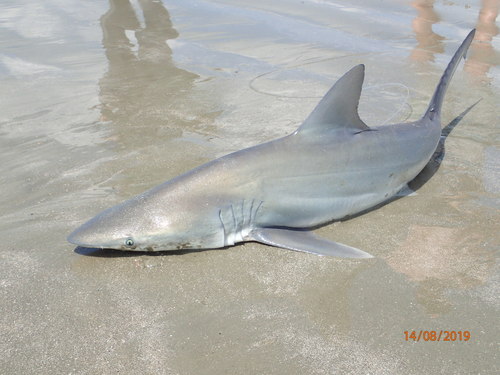
Finetooth Shark
Carcharhinus isodon
A master of the Atlantic shallows, the Finetooth Shark is easily recognized by its needle-like teeth and exceptionally long gill slits. This social predator migrates in large schools, following the warmth of the seasons along the American coast.
Quick Identification
Size
Length of 1.2 to 1.9 metres (4 to 6.2 feet); weighs approximately 15 to 30 kg (33 to 66 lbs).
Colors
Distinctive dark blue-gray or bronzy-gray on the dorsal side, fading to a clean white underbelly; lacks prominent fin markings.
Key Features
- Long gill slits nearly half the length of the head
- Needle-like, unserrated teeth in both jaws
- Slender, streamlined body with a pointed snout
When You’ll See Them
Geographic range
Where Does the Finetooth Shark Live?
Native to the Western Atlantic Ocean, the Finetooth Shark thrives in the warm temperate and tropical waters stretching from North Carolina in the United States down through the Gulf of Mexico. This coastal specialist is also commonly found along the shores of Southern Brazil. Unlike deep-sea dwellers, these sharks remain close to the coastline, frequently visiting estuaries and bays to find food and nursery grounds.
Basemap © OpenStreetMap contributors
Behavior
The Finetooth Shark is a highly active and social species known for forming large, disciplined schools. They are seasonal migrators, moving north toward the Carolinas in the spring and retreating to the warmer southern waters of Florida and the Gulf of Mexico as temperatures drop in the autumn. Their movements are dictated largely by water temperature and the availability of their favorite prey, particularly menhaden.
While they are formidable predators of small fish, Finetooth Sharks are generally shy and wary of humans. They inhabit very shallow water, often just a few meters deep, which brings them into frequent contact with coastal fishers and beachgoers, yet they are not considered a threat to people. Their nurseries are typically located in high-salinity estuaries, where females give birth to live pups every other year.
EverydayEarth exclusive
Camera Tips
Capturing a Finetooth Shark requires specialized underwater equipment rather than a standard terrestrial trail camera. For the best results, use a waterproof action camera or a dedicated underwater trail camera mounted to a weighted base (often called a 'drop cam' or BRUV). Position the camera in shallow, sandy-bottomed areas near estuaries or just beyond the surf break, where these sharks are most likely to cruise for schools of menhaden.
Baiting is the most effective way to draw a Finetooth Shark into the camera's field of view. Secure a perforated PVC tube or mesh bag filled with oily fish, such as crushed menhaden or mackerel, about 1 to 2 metres in front of the lens. The scent trail will attract cruising sharks from down-current, allowing you to capture high-quality footage of their distinctive swimming patterns and long gill slits.
Timing is critical when setting your camera. These sharks are most active during crepuscular periods—dawn and dusk—when light levels are low but visibility is still sufficient for digital sensors. Ensure your camera is set to a high frame rate (at least 60fps) to handle the shark's quick, agile movements. If you are deploying in a 'backyard' canal or salt marsh, check the tides; incoming tides often bring these predators closer to shore as they follow baitfish into the shallows.
Pay close attention to water clarity. Finetooth Sharks prefer coastal waters that can become turbid after rain or heavy surf. For the clearest images, deploy your camera during periods of calm seas and high salinity. Using a wide-angle lens is recommended to capture the full profile of the shark as it circles the bait, as they are often larger than they appear through a narrow field of view.
Similar Species
Species that look similar or are commonly confused with Finetooth Shark.
Frequently Asked Questions
Record Finetooth Shark at your habitat
Connect a camera to start building your own species record — AI identifies every visitor automatically.