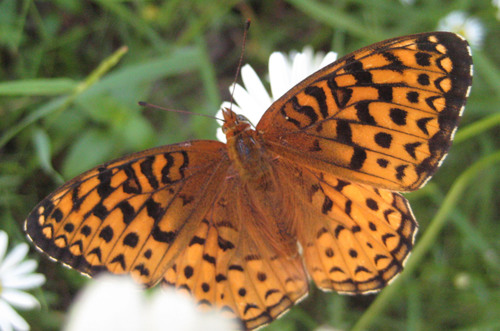
Atlantis Fritillary
Argynnis atlantis
A gem of the northern woods, the Atlantis Fritillary is easily recognized by its mesmerizing silver-spotted wings and unique blue-green eyes. This high-energy butterfly brings a flash of brilliant orange to the sun-dappled edges of the boreal forest.
Quick Identification
Size
Wingspan of 50 to 70 mm (2.0 to 2.8 inches)
Colors
Bright orange upperside with heavy black veins and spots; underside hindwings are dark chocolate brown with distinct silver spots
Key Features
- Striking blue-grey or blue-green eyes
- Solid black outer margins on the upperside of the wings
- Large, reflective silver spots on a dark reddish-brown hindwing underside
When You’ll See Them
Geographic range
Where Does the Atlantis Fritillary Live?
The Atlantis Fritillary is a native of the northern reaches of North America, flourishing in the cool temperate and subarctic zones. Its range spans from the Canadian Maritimes across the Great Lakes region to the Rocky Mountains, extending south through the higher elevations of the Appalachian Mountains. It is most frequently found in the northern United States and across almost every Canadian province where boreal habitat is present.
Basemap © OpenStreetMap contributors
Behavior
The Atlantis Fritillary is a powerful and energetic flier, most commonly seen darting through sunny openings in northern forests. Unlike more casual garden butterflies, this species is highly active, with males constantly patrolling wide territories along forest roads and edges to locate females. They are sun-lovers, requiring the warmth of the afternoon to maintain the energy needed for their rapid flight patterns.
One of their most fascinating social behaviors is 'puddling.' On warm days, groups of males can be found clustering on damp soil, mud, or gravel paths to drink mineral-rich water, which is essential for their reproductive success. While they are generally wary of movement, they become quite approachable when focused on nectar-rich flowers like thistles or Joe-Pye weed, often allowing for close-up observation if approached slowly.
EverydayEarth exclusive
Camera Tips
To capture high-quality images of the Atlantis Fritillary, focus your camera placement on 'thermal islands'—sunny patches along the edges of wooded areas where butterflies congregate to warm their flight muscles. If you have an AI-powered camera, position it roughly 12 to 24 inches away from tall, purple or pink nectar plants like thistles, mints, or milkweed. These butterflies are particularly attracted to these colors and will often return to the same patch of flowers throughout the day.
Another effective technique is to create a 'puddling station' within view of your lens. By keeping a small patch of soil or sand consistently damp with a mixture of water and a pinch of sea salt, you can attract groups of males who land to sip minerals. Set your camera at a low angle, nearly level with the ground, to capture the stunning silver spots on the underside of their wings, which are only visible when they close their wings while resting or drinking.
Because the Atlantis Fritillary is a fast mover, camera settings are vital. Use a fast shutter speed to freeze the motion of their wings. If your camera has a 'burst mode' or 'high-speed trigger,' enable it to capture the moment they transition from flight to landing. Mid-morning to early afternoon is the peak window for activity; once the shadows lengthen and temperatures drop below 65°F, they typically disappear into the canopy to roost, so focus your monitoring efforts on the brightest, warmest hours of the day.
Similar Species
Species that look similar or are commonly confused with Atlantis Fritillary.
Frequently Asked Questions
Record Atlantis Fritillary at your habitat
Connect a camera to start building your own species record — AI identifies every visitor automatically.