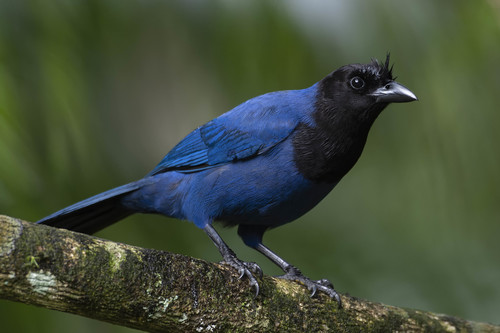
Azure Jay
Cyanocorax caeruleus
Meet the brilliant blue 'gardener' of the Atlantic Forest. The Azure Jay is a social mastermind known for its striking plumage and its essential role in planting the pine forests of South America.
Quick Identification
Size
38-40 cm (15-16 inches) in length; weighs approximately 270g (9.5 oz)
Colors
Brilliant azure blue body and wings; jet black head, throat, and upper breast; black bill and legs; dark brown eyes.
Key Features
- Deep sky-blue body plumage
- Solid black 'hood' covering the head and chest
- Robust, heavy black bill
- Long, expressive tail
When You’ll See Them
Geographic range
Where Does the Azure Jay Live?
The Azure Jay is a South American specialist primarily found in the Atlantic Forest biome of the southern cone. Its core population resides in southern Brazil, particularly in the states of Paraná, Santa Catarina, and Rio Grande do Sul, where it serves as a regional icon. The species also extends its range into northeastern Argentina (Misiones province) and parts of eastern Paraguay, favoring humid, high-altitude woodlands.
Basemap © OpenStreetMap contributors
Behavior
Azure Jays are highly social and intelligent birds that live in complex family groups of up to 15 individuals. These groups are often multi-generational, with older siblings helping the breeding pair to raise new chicks. They are famously vocal and act as the 'sentinels' of the forest, emitting loud, harsh calls to warn other wildlife of approaching predators.
Their most famous behavior is their relationship with the Araucaria (Paraná pine) tree. These jays spend much of the autumn gathering pine nuts (pinhão), which they bury in the ground as a winter food cache. Because they often fail to retrieve all their buried seeds, they are considered the primary natural reforesters of the endangered Araucaria moist forests.
EverydayEarth exclusive
Camera Tips
To successfully capture Azure Jays on a backyard or trail camera, focus on their love for 'pinhão' (Araucaria seeds). If you are in their range, placing these seeds on a high platform feeder or a flat-topped fence post is the most effective lure. Position your camera approximately 5 to 7 feet high, as these birds prefer to feed at a height where they feel safe from ground predators.
Because Azure Jays move in energetic social groups, 'Burst Mode' is essential. They rarely stay still, often hopping rapidly between branches or fluttering their wings while feeding. A fast shutter speed or high-frame-rate video setting will help you capture the intricate details of their vibrant blue feathers without motion blur. Look for areas with dappled sunlight; full shade can make their blue plumage look dark or black, while morning light really makes the azure pop.
If you don't have a feeder, place your camera near a water source like a large birdbath or a natural forest seep. Azure Jays are frequent bathers and their social interactions during bathing make for excellent video footage. Set the camera to trigger with a short delay (3-5 seconds) to ensure you capture the entire group as they arrive one by one.
Similar Species
Species that look similar or are commonly confused with Azure Jay.
Frequently Asked Questions
Record Azure Jay at your habitat
Connect a camera to start building your own species record — AI identifies every visitor automatically.