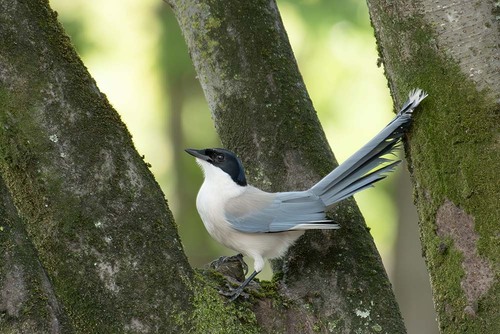
Azure-winged Magpie
Cyanopica cyanus
A masterpiece of East Asian nature, the Azure-winged Magpie combines striking sapphire plumage with a brilliant, social mind. These elegant corvids are a favorite for backyard observers, bringing life and color to gardens across the region.
Quick Identification
Size
31–35 cm (12–14 in) in length; wingspan of 38–44 cm (15–17 in); weight between 65–118g (2.3–4.2 oz)
Colors
Distinctive glossy black cap, light grey-fawn body, azure blue wings and long tail, and a white throat. Males and females look identical.
Key Features
- Glossy black cap extending below the eyes
- Striking azure blue wings and elongated tail feathers
- Light greyish-fawn or buff underparts
- Slender, elegant build compared to other corvids
When You’ll See Them
Geographic range
Where Does the Azure-winged Magpie Live?
The Azure-winged Magpie is native to the eastern side of the Palearctic region in East Asia. Its core population thrives across eastern China, the Korean Peninsula, and throughout Japan, where it is a common sight in both rural and urban landscapes. The range also extends northward into the coniferous forests of Mongolia and the southeastern reaches of Russia near the Amur River. While a closely related species exists in Iberia, the true Azure-winged Magpie remains an iconic bird of the Asian continent.
Basemap © OpenStreetMap contributors
Behavior
Azure-winged Magpies are highly social and intelligent birds, almost always found in noisy, energetic flocks of 10 to 30 individuals. They are famous for their cooperative breeding habits, where family members often help the primary pair raise their chicks. This social structure makes them very communicative, using a wide range of raucous calls to warn the group of predators or signal the discovery of a new food source.
In the backyard setting, they are bold and adaptable. While they can be wary of direct human contact, they quickly learn to associate bird feeders or compost heaps with an easy meal. They are frequently seen performing 'social foraging,' where the entire flock moves through a neighborhood together, hopping from tree to tree in a follow-the-leader fashion. Their flight is graceful and direct, showcasing their vibrant blue feathers against the sky.
EverydayEarth exclusive
Camera Tips
To capture the best footage of Azure-winged Magpies, place your camera near a reliable water source or a large bird bath. These birds are enthusiastic bathers and often visit in groups, providing excellent multi-subject shots. Position the camera at a height of 3 to 5 feet, angled slightly downward toward the water or a flat feeding platform. Because they are social, wide-angle lenses are preferable to capture the whole flock rather than just a single bird.
If you are using bait to attract them to your camera's field of view, use a mix of unsalted peanuts, suet pellets, or mealworms. They are also particularly fond of soft fruits like persimmons or apples, especially in late autumn and winter when other food is scarce. Place the food in an open area with nearby tree cover; the magpies feel safer if they have a quick escape route into the branches, which will encourage them to linger longer in front of your lens.
Since these birds are fast movers, set your AI camera to a high trigger sensitivity and a fast shutter speed to avoid motion blur on those vibrant blue wings. They are most active in the early morning hours just after sunrise and again in the late afternoon. If your camera has a 'burst mode' or 'photo-to-video' setting, enable it; capturing the social interactions between flock members—like food sharing or grooming—is far more rewarding than a static shot of a single bird.
Similar Species
Species that look similar or are commonly confused with Azure-winged Magpie.
Frequently Asked Questions
Record Azure-winged Magpie at your habitat
Connect a camera to start building your own species record — AI identifies every visitor automatically.