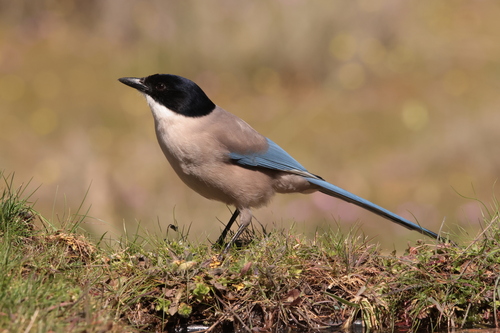
Iberian Magpie
Cyanopica cooki
With its stunning azure wings and jet-black cap, the Iberian Magpie is a masterpiece of the Mediterranean landscape. These highly social and intelligent birds bring a burst of color and character to any backyard lucky enough to host them.
Quick Identification
Size
31–35 cm (12–14 in) in length; wingspan of 38–44 cm (15–17 in); weight ranges from 65–76 g (2.3–2.7 oz).
Colors
Striking azure blue wings and tail, glossy jet-black cap, creamy-white throat, and a pale fawn-grey or pinkish-brown body.
Key Features
- Azure blue wings and long graduated tail
- Glossy black cap extending below the eyes
- Clean white throat contrasting with pale underparts
- Slender, elegant profile compared to the Eurasian Magpie
When You’ll See Them
Geographic range
Where Does the Iberian Magpie Live?
The Iberian Magpie is a Mediterranean specialist native to the southwestern corner of Europe. Its core range is concentrated across the southern and central regions of Spain and Portugal, where it is a familiar sight in the cork oak and holm oak forests. While it was once thought to be the same species as the Azure-winged Magpie of East Asia, it is now recognized as a distinct species unique to the Iberian Peninsula.
Basemap © OpenStreetMap contributors
Behavior
The Iberian Magpie is an exceptionally social and intelligent bird, almost always found in family groups or larger flocks ranging from 6 to 30 individuals. They exhibit complex social structures, including cooperative breeding where younger birds help the dominant pair raise their chicks. You will often see them moving through the landscape in a 'follow-the-leader' fashion, gliding one by one from tree to tree while maintaining constant vocal contact with raspy, nasal calls.
Inquisitive but inherently cautious, these corvids have adapted well to human presence, particularly in areas where food is readily available. They are known for their 'sentinel' behavior, where one bird stays on high alert at the top of a tree to warn the feeding flock of approaching predators like hawks or domestic cats. Their flight is low and undulating, showcasing the brilliant blue of their wings against the Mediterranean sun.
EverydayEarth exclusive
Camera Tips
To capture the best footage of the Iberian Magpie, place your camera at a height of 1.5 to 2 meters (5 to 6.5 feet), facing a clear staging branch or a flat stone. These birds are extremely social, so aim for a wider field of view rather than a tight zoom; you will often find that if one bird lands, three or four others will follow within seconds. Avoid placing the camera too low to the ground, as they prefer to land on elevated structures before descending to feed.
Water is a magnet for this species, especially in the dry summer months of Spain and Portugal. A shallow birdbath or a dripping water feature placed within view of your AI camera will almost guarantee daily visits. If you are using bait, unsalted peanuts (either in or out of the shell) and high-quality suet blocks are their favorites. They are clever birds, so try hiding nuts inside a log or a pinecone to capture 'problem-solving' behavior on video.
Because they move quickly and often arrive in groups, set your camera to 'Burst Mode' or high-frame-rate video to catch the flash of azure blue in their wings. The best lighting occurs in the early morning or late afternoon; mid-day sun in their native range can be very harsh and may wash out the delicate fawn colors of their plumage. If your camera allows for it, set a trigger interval of no more than 5 seconds to ensure you don't miss the social interactions between group members.
Similar Species
Species that look similar or are commonly confused with Iberian Magpie.
Frequently Asked Questions
Record Iberian Magpie at your habitat
Connect a camera to start building your own species record — AI identifies every visitor automatically.