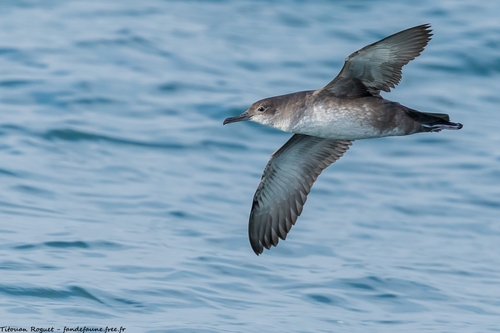
Balearic Shearwater
Puffinus mauretanicus
Meet Europe's most endangered seabird, a master of the Mediterranean waves that nests in secret cliffside caves and roams the Atlantic in search of silver shoals.
Quick Identification
Size
Length: 33–38 cm (13–15 in); Wingspan: 83–93 cm (33–37 in); Weight: 470–570 g (1.0–1.3 lbs)
Colors
Dusky, sooty-brown upperparts and wings. Underparts are off-white or 'dirty' white with brownish-grey mottling on the flanks and underwing.
Key Features
- Sooty-brown upperparts with dingy, smudgy underparts
- Heavy-set body compared to other small shearwaters
- Short, rounded wings and a short tail
- Distinctive low-skimming 'shearing' flight pattern
When You’ll See Them
Geographic range
Where Does the Balearic Shearwater Live?
This rare seabird is native to the Mediterranean Sea, with its only known breeding grounds located on the Balearic Islands of Spain. During the post-breeding season, they migrate through the Strait of Gibraltar to the Atlantic coasts of Portugal, France, and the United Kingdom. While they are a Mediterranean specialty, they are increasingly seen further north in the Bay of Biscay and the Celtic Sea during the summer months.
Basemap © OpenStreetMap contributors
Behavior
The Balearic Shearwater is a maritime specialist, spending the vast majority of its life over the open ocean. It is famous for its 'shearing' flight, a technique where it banks from side to side with stiff wings, barely clearing the surface of the waves to take advantage of wind gradients. At sea, they are highly social and can be seen in massive groups called 'rafts,' often floating together while they digest their latest meal or wait for optimal feeding conditions.
On land, these birds are much more secretive. They only come ashore to breed, and even then, they are strictly nocturnal at their nesting sites to avoid detection by predatory gulls. They nest in deep rock crevices or burrows on remote sea cliffs. While they are silent at sea, the colonies become a cacophony of eerie, rhythmic calls during the night as pairs reunite and defend their nesting sites. Because of their specialized legs, which are set far back for swimming, they are quite clumsy on land and must shuffle or crawl to their burrows.
EverydayEarth exclusive
Camera Tips
Capturing a Balearic Shearwater on a trail camera is a unique challenge because they are almost never found in traditional backyards. If you live on a coastal cliffside along their migration path or near the Balearic Islands, position your camera on a sturdy tripod overlooking the ocean. Use a 'Long Range' PIR sensor setting if available, and point the camera toward headlands or 'choke points' where seabirds are forced closer to shore by the wind. High shutter speeds are essential—at least 1/2000s—to freeze the motion of a bird traveling at high speed low over the water.
For conservationists monitoring nesting sites, the best placement is 1-2 feet from a known burrow entrance. Since these birds are nocturnal when on land, you must use a camera with high-quality 'No-Glow' infrared (IR) LEDs. Standard white flashes will disorient the birds and may lead them to abandon the nest or make them vulnerable to predators. Set the camera to take short 10-second video clips with a minimal trigger delay to capture the bird's quick shuffle from the cliff edge into its burrow.
Environmental factors like salt spray can quickly ruin a camera lens. If your camera is placed near the ocean, use a waterproof housing and regularly wipe the lens with a microfiber cloth and fresh water. In the Atlantic regions (UK, France), the best time to set up your camera is during late summer gales, as 'onshore' winds often push these pelagic birds closer to the coast where they can be more easily documented by shore-based equipment.
Similar Species
Species that look similar or are commonly confused with Balearic Shearwater.
Manx Shearwater
Smaller and much more 'black and white' in appearance, with pure white underparts compared to the Balearic's dusky belly.
Yelkouan Shearwater
Very similar but typically paler underneath with more contrast on the face; it is largely restricted to the central and eastern Mediterranean.
Frequently Asked Questions
Record Balearic Shearwater at your habitat
Connect a camera to start building your own species record — AI identifies every visitor automatically.