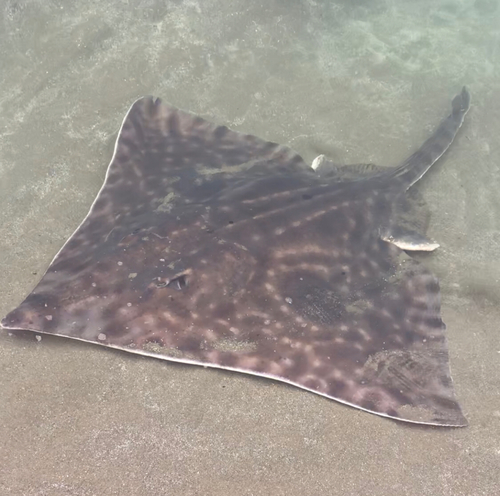
Big Skate
Beringraja binoculata
The largest skate in North American waters, the Big Skate is a ghostly giant of the seafloor known for its massive wingspan and mesmerizing eyespots.
Quick Identification
Size
Up to 2.4 m (8 ft) in length and weighing up to 91 kg (200 lbs)
Colors
Mottled gray, brown, or olive-green upper side with pale spots; white or creamy underside; dark 'eyespots' on pectoral fins
Key Features
- Two large, dark eyespots (ocelli) on wings
- Flattened, diamond-shaped body with a pointed snout
- Dual-lobed pelvic fins
- Long, slender tail with two small dorsal fins near the tip
When You’ll See Them
Geographic range
Where Does the Big Skate Live?
The Big Skate is a native resident of the Eastern Pacific Ocean, making its home along the vast coastline of North America. Its range extends from the frigid waters of the Bering Sea and southeastern Alaska all the way down to the warm temperate waters of central Baja California, Mexico. They are particularly abundant in the protected inland waters of the Salish Sea and throughout the nutrient-rich bays of the California coast.
Basemap © OpenStreetMap contributors
Behavior
Big Skates are master practitioners of the 'sit-and-wait' predatory style. They spend a significant portion of their lives partially buried in sandy or muddy substrate, using their pectoral fins to stir up sediment and settle it over their bodies for camouflage. This allows them to remain invisible to both passing prey and potential predators like sharks or sea lions.
Unlike many other fish, skates are highly tactile and use specialized sensory organs called ampullae of Lorenzini to detect the faint electrical fields produced by hiding prey. While generally solitary, they may gather in high-density areas where food is abundant or during breeding seasons. They are known for their unique 'walking' behavior on the seafloor, using their pelvic fins to push off the bottom in a movement called crutching.
EverydayEarth exclusive
Camera Tips
To capture a Big Skate on camera, you will need a specialized underwater setup or a submersible trail camera rated for at least 30 meters of depth. The best placement is on the seafloor in sandy or silty transition zones, particularly near the edges of eelgrass beds or rocky reefs. Use a weighted base or a 'lobster pot' style cage to keep your camera stable against tidal currents.
Baiting is the most effective way to bring these shy bottom-dwellers into view. Place a mesh bag containing crushed crab, squid, or oily fish like herring directly in front of the lens. The scent trail will draw them in from a distance. Position the camera at a low, 45-degree angle to the seafloor to capture the skate's profile and the distinctive 'eyespots' on its wings as it glides over the bait.
Lighting is crucial in the dim coastal waters where Big Skates roam. If your camera doesn't have built-in LEDs, consider an external waterproof light source, but keep the intensity low to avoid scaring them off. Early morning and late afternoon are the best times for natural light penetration, which often triggers their most active foraging periods. During spring and summer, look for them in shallower waters as they move closer to shore to lay their unique 'mermaid's purse' egg cases.
Similar Species
Species that look similar or are commonly confused with Big Skate.
Frequently Asked Questions
Record Big Skate at your habitat
Connect a camera to start building your own species record — AI identifies every visitor automatically.