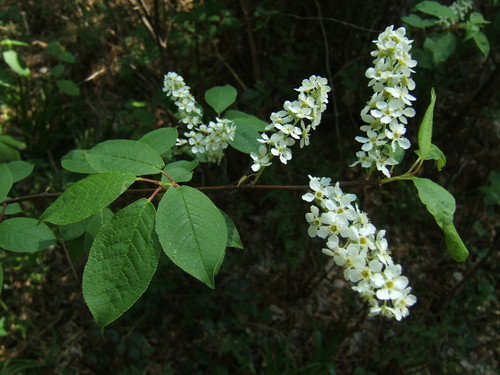
bird cherry
Prunus padus
A spectacular spring bloomer, the bird cherry transforms damp woodlands into fragrant white corridors. Its bitter fruits are a vital lifeline for backyard birds, making it a premier hub for wildlife observation.
Quick Identification
Size
Height of 10–16 m (33–52 ft) with a trunk diameter up to 60 cm (24 in)
Colors
Dark grey-brown bark with horizontal lenticels; bright white blossoms; glossy black fruit
Key Features
- Long drooping clusters (racemes) of almond-scented white flowers
- Small, pea-sized shiny black cherries with a single pit
- Serrated oval leaves with two small red glands on the stalk
- Bitter, pungent-smelling bark when scratched or crushed
When You’ll See Them
Behavior
Unlike domestic cherries, the bird cherry produces fruit that is intensely bitter and astringent to humans due to high tannin content. However, these fruits are a high-energy food source for wildlife. The tree has a relatively fast growth rate but is shorter-lived than many hardwoods, typically reaching its peak and declining within 60 to 80 years. It is well-known for its 'chemical warfare' strategy, as its leaves and bark contain small amounts of hydrogen cyanide to deter larger herbivores.
EverydayEarth exclusive
Camera Tips
To capture the bird cherry in its full glory, position your AI-powered camera 5–10 feet away from the lower branches, ideally focusing on a cluster of flower racemes in late spring or a bunch of ripening fruit in late summer. Because the tree attracts highly active birds like thrushes, starlings, and waxwings, use a fast shutter speed or 'burst mode' to freeze the action as they hover or perch to pluck the bitter cherries. Setting your camera at a slight upward angle against a clear blue sky can make the white spring blossoms 'pop' visually.
During the fruiting season (typically July to August), increase your camera’s PIR (motion) sensitivity. Small birds move quickly; a low sensitivity setting might miss the split-second window when they land on a branch. If your camera supports time-lapse, the bird cherry is an ideal subject—capture one frame every few hours from late April to early May to witness the dramatic 'explosion' of white flowers that characterizes the tree.
Lighting is crucial for this species. Try to orient your camera facing North or South to avoid direct lens flare from the sun, but ensure the tree receives plenty of morning light. The horizontal lenticels on the dark bark provide a beautiful texture for close-up shots, but they can be washed out by a harsh flash at night. If using an infrared camera for nocturnal visitors like moths that visit the flowers, ensure the camera is mounted securely to avoid false triggers from wind-blown branches.
Similar Species
Species that look similar or are commonly confused with bird cherry.
Frequently Asked Questions
Record bird cherry at your habitat
Connect a camera to start building your own species record — AI identifies every visitor automatically.