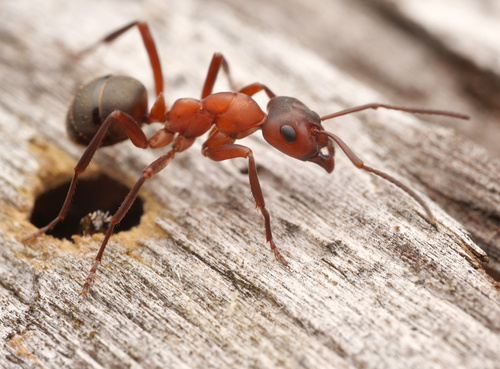
Blood-red Field Ant
Formica sanguinea
The Blood-red Field Ant is a bold and strategic master of the undergrowth, famous for its red-and-black armor and its unique habit of raiding neighbor colonies. These fascinating insects are the perfect subjects for backyard macro-photography, offering a glimpse into a complex world of insect warfare and cooperation.
Quick Identification
Size
Workers range from 5–9 mm (0.2–0.35 in); Queens are slightly larger, reaching up to 10–11 mm (0.43 in).
Colors
Striking bicolored body with a vibrant blood-red or rust-red head and thorax, contrasting sharply with a dark black or deep charcoal abdomen (gaster).
Key Features
- Distinctive blood-red head and thorax with a black gaster
- Notched clypeus (front of the head) visible under macro lens
- Aggressive behavior when disturbed, often spraying formic acid
- Commonly seen trailing in 'raid' lines toward other ant nests
When You’ll See Them
Geographic range
Where Does the Blood-red Field Ant Live?
Native to the vast Palearctic realm, the Blood-red Field Ant enjoys a massive geographic footprint that stretches from the United Kingdom and Northern Europe across the Russian plains to Japan and the Korean Peninsula. While it is a staple of Eurasian temperate forests, it is also found in parts of North Africa and throughout the United States and Canada. These ants are particularly fond of 'edge' habitats where sunshine can reach the ground, making them a common sight in both wild heathlands and established suburban neighborhoods.
Basemap © OpenStreetMap contributors
Behavior
The Blood-red Field Ant is famous in the insect world for its 'facultative slave-making' behavior. While these ants are perfectly capable of maintaining a colony on their own, they frequently launch organized raids on the nests of other Formica species, such as the Common Black Ant. During these raids, they steal the pupae and bring them back to their own nest. When the stolen ants hatch, they instinctively perform worker duties for the Blood-red colony, unaware they are in a different nest.
Beyond their raiding tactics, these ants are highly territorial and active hunters. They are known for their 'acid-spraying' defense; when threatened, they tuck their abdomen forward and spray formic acid at intruders. They are sun-lovers and are most active during the warmest parts of the day, often seen scurrying across garden paths or through leaf litter in search of food or conquest.
In a backyard setting, they are beneficial as they prey on various garden pests. Unlike some invasive ant species, they generally do not enter homes unless there is a significant food source near an entrance. They form large, complex underground nests, often topped with small mounds of soil or debris located near rocks or rotting wood that help regulate the nest's temperature.
EverydayEarth exclusive
Camera Tips
To capture the Blood-red Field Ant on camera, you need to think small and focus on high-traffic areas. Look for their nests near sun-exposed wood or stones. Because these ants are highly active during the day, position your camera in a spot that receives dappled sunlight. Since they are small, a macro lens or a camera with a very close focal point is essential. Place the camera at ground level, ideally using a small tripod or a beanbag for stability, and angle it slightly upward to capture their profile against the sky or foliage.
Baiting is the most effective way to bring them into the frame. A small dab of honey, jam, or a piece of overripe fruit placed on a flat stone will attract workers within minutes. If you want to see their predatory side, a small piece of protein like a bit of tuna or a dead cricket can trigger a group foraging response, which makes for excellent time-lapse or high-frame-rate video. Keep the bait in a consistent spot for a few days to 'train' the ants to visit that specific stage for your camera.
Lighting is your biggest challenge and your best friend. Direct midday sun can wash out their vibrant red colors, so try to use a white card or a piece of parchment paper to diffuse the light if you are doing a controlled setup. If your camera allows for manual focus, pre-focus on the bait or a specific point on an ant trail. Because these ants move quickly, using a high shutter speed is necessary to freeze the motion and see the fine details of their antennae and legs.
Similar Species
Species that look similar or are commonly confused with Blood-red Field Ant.
Frequently Asked Questions
Record Blood-red Field Ant at your habitat
Connect a camera to start building your own species record — AI identifies every visitor automatically.