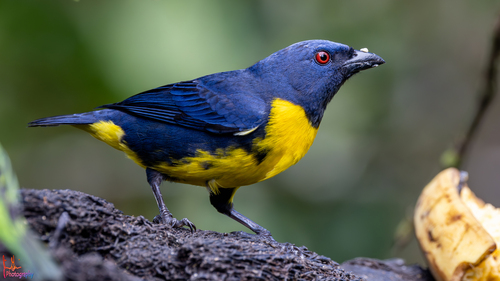
Blue-and-gold Tanager
Bangsia arcaei
A striking inhabitant of Central American cloud forests, the Blue-and-gold Tanager is a master of contrast, sporting deep sapphire plumage and a radiant golden chest. Finding one is a hallmark of a healthy, vibrant tropical mountain ecosystem.
Quick Identification
Size
15-16 cm (6-6.3 inches) in length; weighs approximately 32-42 grams.
Colors
Deep navy to purplish-blue upperparts, brilliant golden-yellow breast and belly, and a dark blackish face mask.
Key Features
- Rich navy blue upperparts
- Brilliant golden-yellow underparts
- Heavy, thick-based bill
- Dark blackish face and throat
- Medium-sized, chunky tanager silhouette
When You’ll See Them
Geographic range
Where Does the Blue-and-gold Tanager Live?
This stunning species is native to the wet montane regions of Central America. It is found exclusively in Costa Rica and Panama, specifically inhabiting the Talamancan montane forests and the rugged highlands of the Serranía del Darién. These birds thrive in high-humidity environments where moss and epiphytes are abundant, making them true specialists of the Caribbean foothills and middle elevations.
Basemap © OpenStreetMap contributors
Behavior
The Blue-and-gold Tanager is a jewel of the humid montane forests, known for its somewhat secretive nature. While it occasionally joins mixed-species foraging flocks alongside other tanagers and honeycreepers, it is just as often found in pairs or small family groups scouting the mid-canopy for ripe fruit. Unlike some more gregarious garden birds, this species tends to stay within the shadows of the forest interior, making it a rewarding challenge for wildlife observers.
These birds are highly territorial during the breeding season and spend much of their time hopping through moss-covered branches rather than flying long distances. Their interactions with humans are limited, as they prefer the undisturbed interiors of primary forests or older, mature secondary growth. If you are lucky enough to have a backyard or lodge property bordering a cloud forest, they may visit specifically for native fruit-bearing trees or well-placed feeders.
EverydayEarth exclusive
Camera Tips
To capture the Blue-and-gold Tanager on camera, elevation and moisture are key. These birds are most common between 700 and 1,500 meters, so ensure your camera is placed in a high-altitude garden or a property bordering a forest reserve. Because they can be shy, position your camera near a mist-heavy area or a natural forest opening where they might descend from the high canopy to feed on lower-growing shrubs.
Feeding stations are highly effective for attracting this species for a close-up. Use a raised platform feeder, ideally positioned about 5 to 7 feet off the ground, and stock it with overripe bananas, plantains, or halved papayas. These tanagers are particularly fond of native berries, so if you have fruiting Melastomataceae plants on your property, aim your camera at those specific branches during the fruiting season. Use a fast trigger speed (0.2s or less) because they move with quick, nervous hops when at a feeder.
Since cloud forests are notoriously dim and overcast, your camera settings are crucial for a clear shot. Use a camera with a high-quality low-light sensor and set your video resolution to at least 2K to capture the iridescent shimmer of their deep blue feathers. If using a trail camera with infrared, ensure the 'No-Glow' or 'Black' LEDs are used to avoid startling them during the early morning hours. A slight downward angle from a nearby tree trunk can provide an excellent view of their vibrant golden underparts as they land on a perch.
Similar Species
Species that look similar or are commonly confused with Blue-and-gold Tanager.
Frequently Asked Questions
Record Blue-and-gold Tanager at your habitat
Connect a camera to start building your own species record — AI identifies every visitor automatically.