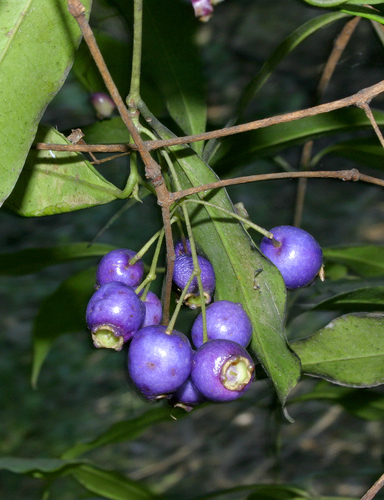
Blue Lilly Pilly
Syzygium oleosum
A stunning Australian native famous for its electric blue berries and shimmering evergreen canopy, the Blue Lilly Pilly is a vibrant sanctuary for backyard birds and pollinators.
Quick Identification
Size
Typically 4-15 metres (13-50 feet) tall with a trunk diameter up to 30 centimetres (12 inches).
Colors
Glossy dark green leaves, creamy-white flowers, and vibrant blue to purplish-magenta berries.
Key Features
- Glossy leaves with translucent oil dots visible when held to light
- Fluffy white flowers with numerous long, protruding stamens
- Small, round, spongy berries ranging from pale blue to deep purple
- Aromatic, pleasant scent when the leaves are crushed
When You’ll See Them
Geographic range
Where Does the Blue Lilly Pilly Live?
Native to the Oceania region, the Blue Lilly Pilly is a staple of the eastern Australian coastline. Its core range extends from the tropical reaches of North Queensland down through the temperate regions of New South Wales. While it prefers the humid conditions of the coast and nearby hinterland, it has been successfully introduced as an ornamental plant in gardens throughout many other parts of Australia.
Basemap © OpenStreetMap contributors
Behavior
The Blue Lilly Pilly is a resilient and fast-growing evergreen tree that plays a vital role in its ecosystem. While it doesn't 'behave' in the animal sense, it is known for its prolific flowering and fruiting cycles which dictate the activity of local wildlife. During the late spring and summer blooming periods, the tree becomes a hub of activity for pollinators such as honeybees, native bees, and hoverflies.
In the cooler months, the tree produces a heavy crop of succulent blue fruits. This attracts a wide variety of frugivorous birds and mammals, making it a cornerstone species for backyard biodiversity. In suburban settings, it is highly valued for its dense, screening foliage, which provides essential nesting sites and protection for smaller bird species from predators like hawks or domestic cats.
EverydayEarth exclusive
Camera Tips
Capturing the Blue Lilly Pilly effectively involves more than just photographing the tree; it's about documenting the ecosystem it supports. Place your camera on a sturdy tripod or mount it to a nearby fence, angling it toward a cluster of ripening berries. Because these fruits are a magnet for birds like Silvereyes and Satin Bowerbirds, a mid-height placement (1.5 to 2 metres) is ideal for catching the action as they land to feed.
If you are looking for nocturnal visitors, the Blue Lilly Pilly is a favorite of Common Brushtail Possums and Grey-headed Flying Foxes. Set your camera to trigger on motion with a fast shutter speed to capture these quick-moving mammals. Ensure your infrared flash is enabled, as these visitors will primarily arrive under the cover of darkness to feast on the sweet, spongy fruit.
For those interested in macro details, focus your camera on the flowers during early summer mornings. This is the peak time for native stingless bees and butterflies. Using a 'macro' or 'close-focus' setting on your AI camera will help identify the specific insect species visiting the blossoms. If your camera allows for time-lapse, a 24-hour cycle during the peak of winter fruiting can reveal the incredible diversity of life that relies on this single tree.
Similar Species
Species that look similar or are commonly confused with Blue Lilly Pilly.
Frequently Asked Questions
Record Blue Lilly Pilly at your habitat
Connect a camera to start building your own species record — AI identifies every visitor automatically.