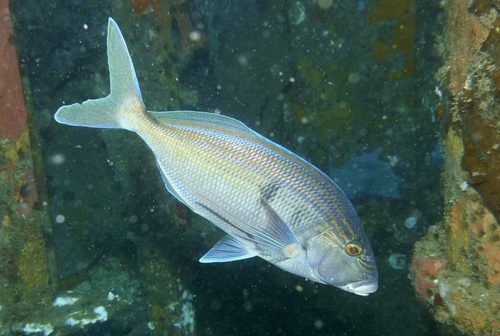
Blue Morwong
Nemadactylus valenciennesi
Meet the 'Queen of the Reef,' an iridescent icon of Australia's southern coast. The Blue Morwong is as curious as it is beautiful, known for its shimmering scales and signature thick lips.
Quick Identification
Size
Typically 60-90 cm (24-35 inches), reaching a maximum of 100 cm (40 inches); weights up to 10 kg (22 lbs).
Colors
Brilliant iridescent blue to silvery-grey body; fins often have a yellowish or golden hue; pale, fleshy lips.
Key Features
- Large, thick fleshy lips
- Elongated pectoral fin ray
- Deeply forked tail
- Iridescent blue sheen across the flanks
When You’ll See Them
Geographic range
Where Does the Blue Morwong Live?
The Blue Morwong is a true blue Australian native, found exclusively in the temperate waters surrounding the southern half of the continent. Its core range extends from the central coast of New South Wales, sweeping around the southern coastline including the waters of Tasmania, and reaching up to the central coast of Western Australia. This species is a coastal specialist, thriving in the cool, nutrient-rich currents of the Great Australian Bight and the rocky sub-tidal zones of the south.
Basemap © OpenStreetMap contributors
Behavior
The Blue Morwong is a graceful and often inquisitive inhabitant of southern Australian reefs. Unlike some of its more skittish relatives, this species is known to be relatively bold, sometimes approaching divers to investigate. They are typically seen hovering just above the seafloor or cruising along rocky reef margins in search of food. They are diurnal, meaning they are most active during daylight hours when they can use their keen eyesight to forage.
While younger individuals may form small schools for protection, larger adults are often more solitary or found in pairs. They are long-lived fish, with some individuals estimated to reach over 20 years of age. They play a vital role in the reef ecosystem as mid-level predators, maintaining the balance of invertebrate populations on the seabed. Their movement is distinct, often involving short bursts of swimming followed by periods of 'standing' on their pectoral fins on the substrate.
EverydayEarth exclusive
Camera Tips
Capturing the Blue Morwong on camera requires an underwater setup, such as a waterproof action camera or a specialized marine trail cam mounted to a weighted base. For the best results, position your camera near the 'transition zone'—the area where a rocky reef meets the sandy seafloor. This is the primary foraging ground for Blue Morwongs as they move between the cover of the rocks and the food-rich sand.
To attract these curious fish to your lens, use a perforated bait canister filled with crushed oily fish, like sardines, or even sea urchin roe. Secure the bait about 1 to 2 metres in front of the camera. Blue Morwongs are highly visual and attracted to movement; a small, shiny spinner or a piece of white cloth tied near the bait can pique their curiosity and encourage them to linger in the frame. Ensure the camera is facing away from the sun to avoid lens flare and capture the best color saturation.
Visibility is the biggest challenge in marine photography. Plan your camera deployment during periods of low swell and clear water, usually following a few days of light offshore winds. The Blue Morwong's iridescent scales look most spectacular in natural light, so set your camera to record during the middle of the day (10 AM to 2 PM) when the sun is highest. If you are filming in deeper water (below 10 metres), the blue light can wash out details; using a red dive filter can help restore the natural warmth and contrast of the fish's markings.
Similar Species
Species that look similar or are commonly confused with Blue Morwong.
Frequently Asked Questions
Record Blue Morwong at your habitat
Connect a camera to start building your own species record — AI identifies every visitor automatically.