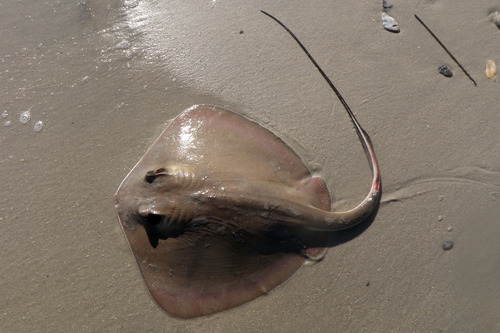
Bluntnose Stingray
Hypanus say
A master of camouflage and grace, the Bluntnose Stingray is a frequent visitor to shallow Atlantic shores, easily identified by its rounded wings and peaceful nature.
Quick Identification
Size
Disc width typically up to 78 cm (31 in); total length including tail can exceed 1.2 m (4 ft). Weight ranges from 2 to 10 kg (4.5 to 22 lbs).
Colors
Dorsal surface is typically brown, yellowish-brown, or olive-grey. Ventral side is white or cream. Tail features a dark fin fold.
Key Features
- Rhomboid-shaped pectoral disc with rounded outer corners
- Distinctly blunt, obtuse-angled snout
- Whip-like tail with both an upper keel and a lower fin fold
- Single row of small thorns or tubercles along the midline of the back
When You’ll See Them
Geographic range
Where Does the Bluntnose Stingray Live?
The bluntnose stingray is native to the western Atlantic Ocean, thriving in the coastal waters of North and South America. Its range extends from the northern reaches of Massachusetts in the United States, down through the Gulf of Mexico and the Caribbean Sea, reaching as far south as Venezuela. In the northern part of its range, this species is highly migratory, traveling to warmer southern waters as temperatures drop in the autumn.
Basemap © OpenStreetMap contributors
Behavior
The bluntnose stingray is a bottom-dwelling specialist that spends much of its time partially buried in soft substrate. By using its pectoral fins to scoop sand or mud over its back, it becomes nearly invisible to both predators and unsuspecting prey. This species is generally solitary, although they may be found in high concentrations in favorable feeding grounds or during seasonal migrations.
These rays are not aggressive and will typically swim away when approached by humans. However, they possess a venomous serrated spine at the base of their tail used strictly for self-defense. In coastal areas where humans wade, the 'stingray shuffle'—sliding one's feet along the bottom rather than lifting them—is the best way to alert a buried ray of your presence and avoid an accidental sting.
EverydayEarth exclusive
Camera Tips
Capturing a bluntnose stingray on a backyard or dock camera requires an underwater setup, such as a GoPro on a weighted mount or a specialized submersible trail camera. For the best results in coastal 'backyards' like canals or bays, place your camera on a flat, sandy patch near the edge of a seagrass bed or under a dock piling. These are high-traffic corridors where rays forage for buried crustaceans. Angle the camera slightly downward (about 10-15 degrees) to capture the ray's flat profile as it glides along the seafloor.
Since these rays rely on smell to find food, you can significantly increase your 'capture' rate by using a scent lure. A small mesh bait bag filled with crushed crab shells or oily fish like mullet, secured just outside the camera's frame, will draw them into view. Be patient; the ray will often circle the area several times, using its electro-receptors to pinpoint the source of the scent, providing excellent footage of its underside if it passes over the camera.
Lighting is a critical factor in underwater recording. In shallow water (under 3 meters), natural sunlight is usually sufficient during the middle of the day. However, for night recordings, use cameras equipped with invisible infrared or very dim red LEDs. Bluntnose stingrays are sensitive to sudden bright white light and may flee if a powerful spotlight is triggered. Set your camera to record high-frame-rate video (60fps or higher) to capture the rhythmic, wave-like motion of their pectoral fins.
Seasonal timing is vital for those in the Mid-Atlantic or New England. Target the summer months when the water is warmest and the rays move into the shallows to pup and feed. If you are using a motion-triggered camera, ensure the sensitivity is set to high, as the smooth, gliding motion of a ray can sometimes fail to trigger sensors designed for high-contrast land animals. Check your housing for salt buildup weekly to ensure your lens remains crystal clear.
Similar Species
Species that look similar or are commonly confused with Bluntnose Stingray.
Frequently Asked Questions
Record Bluntnose Stingray at your habitat
Connect a camera to start building your own species record — AI identifies every visitor automatically.