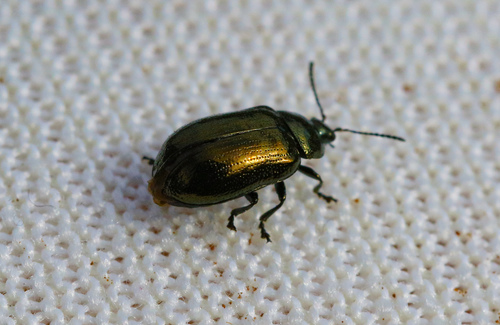
Brassy Willow Beetle
Phratora vitellinae
A shimmering metallic gem of the riverside, the Brassy Willow Beetle is a master of chemical defense and a dazzling addition to any garden with a love for willows.
Quick Identification
Size
Adults measure between 3.5 and 5.2 mm (0.14 to 0.20 inches) in length.
Colors
Usually a brilliant metallic bronze or brassy color; some individuals may appear metallic blue, green, or purple.
Key Features
- Oblong, metallic body
- Fine rows of punctures on the wing cases (elytra)
- Antennae with thickened outer segments
- Width of the thorax is greater than its length
When You’ll See Them
Geographic range
Where Does the Brassy Willow Beetle Live?
The Brassy Willow Beetle is a widespread inhabitant of the Palearctic realm, native to the vast stretches of Europe and temperate Asia. From the misty river valleys of the United Kingdom and Scandinavia down to the Mediterranean, and stretching across Russia into China, this beetle follows the distribution of its favorite deciduous trees. While primarily a Eurasian species, it is highly successful wherever willow and poplar groves provide the necessary resources for its lifecycle.
Basemap © OpenStreetMap contributors
Behavior
The Brassy Willow Beetle is a diurnal insect that spends its entire life cycle in close association with its host plants. As an adult, it is an active flyer during the warmer months, frequently seen crawling across the upper surfaces of leaves to bask in the sun. This beetle is particularly noted for its sophisticated chemical ecology; while it may look like a defenseless piece of jewelry, it is actually quite hardy and well-protected from predators.
The larvae of this species exhibit a remarkable defensive behavior. They graze on the undersides of leaves, and as they consume the plant material, they sequester salicin from the willow or poplar. They then convert this compound into a pungent, volatile secretion called salicylaldehyde, which they emit from specialized glands to repel ants and other potential threats. This 'chemical shield' is a classic example of an insect utilizing its diet for protection.
EverydayEarth exclusive
Camera Tips
Capturing the Brassy Willow Beetle requires a dedicated macro setup because of its small size. If you are using a backyard AI camera, ensure it has a macro lens attachment or a 'close-focus' mode. Position the camera on a sturdy branch of a willow or poplar tree, focusing specifically on the underside of young leaves where the larvae congregate, or the sun-drenched upper leaves where adults like to bask.
To get the best color representation, aim for bright but diffused lighting. The metallic shell of the beetle acts like a tiny mirror; direct, harsh sunlight can cause high-contrast glares that obscure the beetle's features. Overcast days or early morning light will highlight the iridescent bronze and green hues much more effectively. Set your camera's trigger sensitivity to 'high' and use a fast shutter speed to freeze the motion of the beetle as it crawls.
Timing is critical for this species. In the early spring, focus your camera on the newly opening buds of willow trees, as overwintered adults will emerge from the bark or leaf litter to feed on the fresh growth. If you notice leaves that look like lace—with the green tissue eaten away but the veins intact—you have found the perfect spot to mount your camera, as a colony is likely active in that immediate area.
Similar Species
Species that look similar or are commonly confused with Brassy Willow Beetle.
Frequently Asked Questions
Record Brassy Willow Beetle at your habitat
Connect a camera to start building your own species record — AI identifies every visitor automatically.