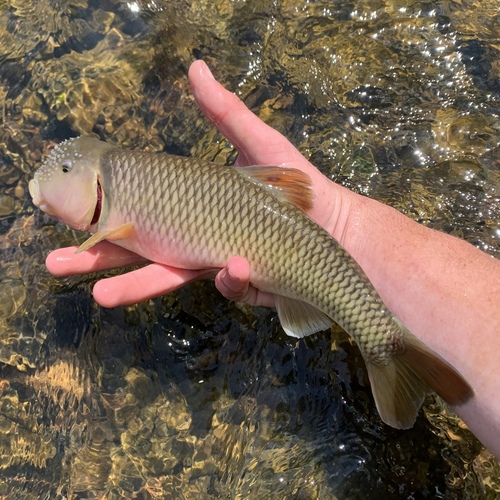
Bull Chub
Nocomis raneyi
The Bull Chub is a master builder of the American Southeast, constructing massive stone nests that support entire river ecosystems. With its golden scales and hardworking nature, it is a fascinating subject for any underwater observer.
Quick Identification
Size
18–32 cm (7–13 in) in length; typically weighs 150–400g
Colors
Golden-brown to olive sides with a pale or yellowish tint on the fins; spawning males develop a distinct rosy-pink wash on the belly and sides.
Key Features
- Chubby, cylindrical body with a pointed snout
- Small, subterminal mouth positioned slightly under the snout
- Large, prominent scales with gold or bronze highlights
- Spawning males feature small bumps (tubercles) on the head
When You’ll See Them
Geographic range
Where Does the Bull Chub Live?
Native to the North American continent, the Bull Chub is a regional specialist found exclusively in the Atlantic Slope drainages of the eastern United States. Its core range is concentrated within the states of Virginia and North Carolina, specifically inhabiting the river systems located between the James River and the Neuse River. These fish are typically found above the Fall Line, favoring the swifter, clearer waters of the inland Piedmont and lower Appalachian foothills rather than the slower coastal plains.
Basemap © OpenStreetMap contributors
Behavior
They are relatively social fish but can be territorial around their nesting sites. Because they are diurnal, they are most active during the day, constantly scanning the stream bed for food or maintaining their nests. While they don't interact directly with humans, they are highly sensitive to water quality and siltation, making them excellent indicators of a healthy stream ecosystem.
EverydayEarth exclusive
Camera Tips
Spring is the golden window for filming. When water temperatures rise in late April and May, the males become hyper-active. Set your camera to record in short bursts or use a motion-trigger if it works reliably through water. High-definition video with a high frame rate (60 fps or higher) is recommended, as it allows you to slow down the footage to observe the precise way the fish manipulate stones with their mouths.
Lighting is your biggest challenge in aquatic environments. Position your camera so the sun is behind it or directly overhead to minimize shadows and help illuminate the subtle rose and gold colors of the fish. If you are filming in a shaded forest stream, you may need to use a camera with a high-quality sensor that performs well in low light. Avoid using external lights if possible, as they can startle the fish or attract unwanted debris to the lens area.
Similar Species
Species that look similar or are commonly confused with Bull Chub.
Frequently Asked Questions
Record Bull Chub at your habitat
Connect a camera to start building your own species record — AI identifies every visitor automatically.