Cape Ash
Ekebergia capensis
A majestic African evergreen with a sweeping canopy, the Cape Ash is a cornerstone of biodiversity that transforms any landscape into a thriving wildlife sanctuary.
Quick Identification
Size
Height: 7–20m (up to 35m in deep forests) / 23–65ft; Canopy spread: 8–15m / 26–50ft
Colors
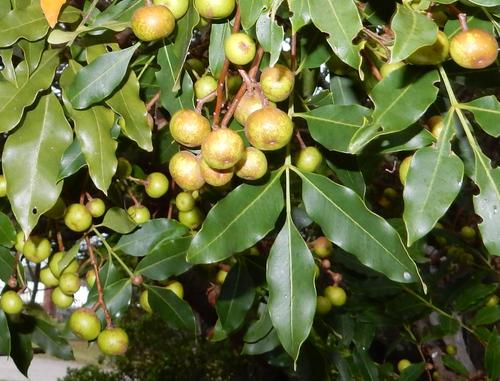
Glossy dark green foliage; smooth silver-grey bark; fleshy bright red or pinkish fruits
Key Features
- Large pinnately compound leaves with a distinct terminal leaflet
- Smooth grey bark that becomes rough and flaky with age
- Clusters of small, fragrant white or greenish flowers
- Fleshy, marble-sized red berries that attract fruit-eating birds
When You’ll See Them
Geographic range
Where Does the Cape Ash Live?
The Cape Ash is native to the African continent, where it enjoys a massive distribution stretching from the Eastern Cape of South Africa northward through Zimbabwe and Mozambique into East Africa, reaching as far as Sudan and Ethiopia. It is a staple of Afro-temperate and tropical forests but has also been successfully introduced to Ascension Island in the South Atlantic. This tree thrives in various climates, from sea-level coastal dunes to high-altitude mountain forests.
Basemap © OpenStreetMap contributors
Behavior
The Cape Ash is a fast-growing, majestic tree known for its massive, spreading canopy and ecological importance. While it is evergreen in high-rainfall areas, it can become briefly semi-deciduous in colder or drier climates, losing its leaves for a short period before new, copper-colored growth emerges. Its root system is aggressive and expansive, designed to seek out water and provide stability for its heavy crown.
Ecologically, the Cape Ash acts as a bustling hub for local wildlife. It is a primary food source for a variety of species; its sweet-scented flowers attract bees and butterflies, while its heavy crops of red berries are a magnet for birds and mammals. In suburban environments, it is highly valued as a shade tree, though its large size and root system mean it requires significant space to thrive without damaging structures.
EverydayEarth exclusive
Camera Tips
Capturing wildlife on a Cape Ash requires focusing on its crown and main branches rather than the trunk. Since the tree is a 'super-producer' of fruit, the best camera placement is high up in the canopy during the fruiting season (summer and autumn). Use a sturdy limb-mount to secure your camera near a cluster of ripening berries. This will allow you to capture high-quality footage of Turacos, Barbets, and various Starling species that frequent the tree for food.
If you are monitoring ground-dwelling wildlife, place your camera 3-5 meters back from the base of the tree, angled slightly upward. Many mammals, such as Bushbuck or Duiker, will visit the area specifically to forage for fallen fruits. Because the canopy provides deep shade, ensure your camera has a sensitive sensor or adjust your exposure settings to account for the lower light levels beneath the foliage, even during midday.
Nighttime is equally productive; Cape Ash trees are popular roosting spots for fruit bats and nesting sites for owls. Use a camera with a high-quality infrared (IR) flash to avoid startling the animals while capturing their nocturnal activities. If your AI camera supports it, set a trigger zone around specific fruiting branches to filter out wind-blown leaf movement while prioritizing the movement of visiting animals.
Similar Species
Species that look similar or are commonly confused with Cape Ash.
Natal Mahogany
The Natal Mahogany has larger, darker, and more leathery leaves without the tapering tip of the Cape Ash, and its fruit is a three-valved capsule rather than a fleshy berry.
Water Berry
Water Berry leaves are simple and grow in opposite pairs, unlike the compound leaves of the Cape Ash, and it typically thrives in much wetter, swampy soils.
Frequently Asked Questions
Record Cape Ash at your habitat
Connect a camera to start building your own species record — AI identifies every visitor automatically.