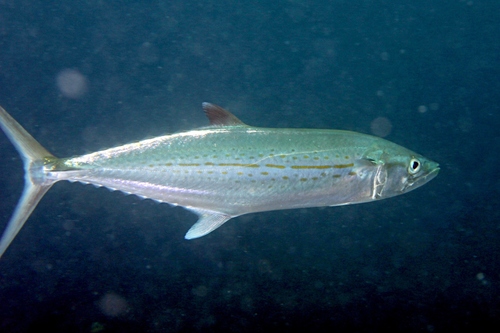
Cero
Scomberomorus regalis
The Cero is the 'painted' speedster of the Atlantic reefs, recognized by its shimmering gold spots and racing stripe. This fast-moving predator brings a flash of tropical color to coastal underwater cameras.
Quick Identification
Size
Typically 45–90 cm (18–35 in) and 2–5 kg (5–11 lbs); can reach 183 cm (6 ft) and 7.7 kg (17 lbs)
Colors
Iridescent blue-green back with silvery sides; features a prominent dark bronze longitudinal stripe and rows of yellow-gold spots
Key Features
- Single dark longitudinal stripe along the midline
- Yellow-gold spots flanking the central stripe
- Deeply forked caudal fin
- Streamlined, torpedo-shaped body
When You’ll See Them
Geographic range
Where Does the Cero Live?
The Cero is native to the warm waters of the Western Atlantic Ocean. Its primary range spans from the clear tropical waters of the Caribbean and the Bahamas up through the Florida Keys and occasionally as far north as Massachusetts during warm summers. To the south, they are commonly found along the coast of Brazil, thriving in areas where coral reefs and clear oceanic currents meet the shoreline.
Basemap © OpenStreetMap contributors
Behavior
The Cero is a high-speed, predatory mackerel that primarily patrols clear, coastal waters and coral reef edges. Unlike many of its cousins, it is a frequent visitor to shallow water, often seen in small loose schools or as solitary hunters. They are exceptionally agile and are known for their 'skyrocketing' behavior—bursting out of the water at high speeds while pursuing baitfish near the surface.
While they are wary of large disturbances, they are naturally curious about movement and glinting light. In coastal areas, they may follow the tide into bays or hang around piers and docks where baitfish congregate. They are strictly diurnal, relying on their keen eyesight to ambush prey during daylight hours.
EverydayEarth exclusive
Camera Tips
To capture the Cero on an underwater AI camera, placement is everything. If you have a dock or a sea wall, mount your camera 2 to 4 feet below the low-tide line, facing outward toward open water. Cero prefer clear water with high visibility, so avoid muddy or turbulent areas. Use a wide-angle lens to account for their high-speed 'fly-bys' which can happen in the blink of an eye.
Because Cero are visual hunters, you can attract them into the camera's field of view without using messy bait. Suspend a 'flash-tape' or a shiny, chrome-finished lure about 3 feet in front of the lens. The movement of the water will cause the object to flicker, mimicking a wounded baitfish, which often draws a Cero in for a closer inspection or a high-speed strike.
Timing and light are critical for getting the best colors on camera. Cero have iridescent scales that look best when the sun is high and piercing the water column. However, their peak hunting activity occurs during the early morning and late afternoon. For the best results, set your AI camera to trigger on high-motion events and use a high frame rate (60fps or higher) to prevent the fish from appearing as a silver blur.
Similar Species
Species that look similar or are commonly confused with Cero.
Atlantic Spanish Mackerel
Spanish Mackerel lack the dark longitudinal stripe found on the Cero and have fewer spots.
King Mackerel
King Mackerel grow much larger, have a sharply dipping lateral line, and lack the Cero's yellow spots as adults.
Wahoo
Wahoo have vertical 'tiger' stripes rather than spots and a longitudinal stripe, and they are typically found in much deeper water.
Frequently Asked Questions
Record Cero at your habitat
Connect a camera to start building your own species record — AI identifies every visitor automatically.