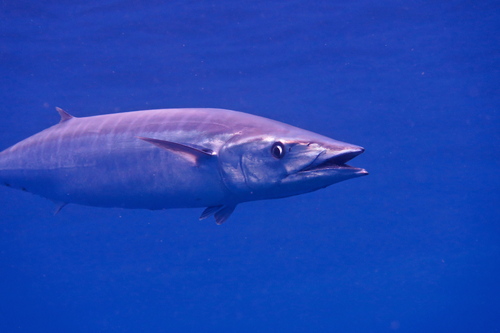
Wahoo
Acanthocybium solandri
A bolt of iridescent blue in the open ocean, the Wahoo is the ultimate high-speed predator. Known for its razor-sharp teeth and incredible velocity, this sleek 'sea-tiger' is a master of the deep blue.
Quick Identification
Size
Typically 3.3 to 5.5 feet (1 to 1.7 meters) in length, but can reach 8 feet (2.5 meters). Weight usually ranges from 15 to 40 pounds (6.8 to 18 kg), with trophy specimens exceeding 100 pounds (45 kg).
Colors
Steel-blue or iridescent green on the back, fading to silvery sides with 25 to 30 vertical cobalt blue bands that wrap around the belly; fins are typically dark blue or grey.
Key Features
- Long, torpedo-shaped body with a streamlined profile
- Beak-like snout with a moveable upper jaw
- Distinct vertical blue bars that fade quickly after capture
- Finlet-covered tail section leading to a deeply forked, scissor-like caudal fin
When You’ll See Them
Behavior
The Wahoo is a solitary wanderer of the open ocean, though they are occasionally found in small, loose groups near floating debris or over deep-water ledges. Known as one of the fastest fish in the sea, they use their incredible speed to ambush prey, often striking from below with such force that they launch themselves entirely out of the water. This high-energy lifestyle requires constant movement to keep oxygen flowing over their gills.
While they are prized by sports fishermen for their blistering initial runs and high-quality meat (known as 'Ono' in Hawaii, meaning 'delicious'), they are elusive subjects for casual observers. They rarely interact with humans unless attracted by fishing lures or chum. Their social structure is minimal; they are apex predators that rely on stealth and velocity rather than pack hunting.
EverydayEarth exclusive
Camera Tips
Capturing a Wahoo on camera requires specialized underwater equipment, as these are pelagic fish that do not visit traditional backyards. If you are using an AI-powered underwater camera or a 'trolling cam,' focus your efforts on the epipelagic zone. Wahoo are highly attracted to motion and flash; mounting your camera behind a shiny, high-speed lure or a 'daisy chain' of teasers is the most effective way to bring them into frame. They typically strike from the side or behind, so a rear-facing camera mounted on a trolling spread is ideal.
Because Wahoo move at speeds up to 60 mph, your camera settings are critical. Use a high frame rate (at least 60fps, but 120fps is better) to prevent motion blur during their lightning-fast strikes. If your AI software supports it, set triggers for high-contrast movement. Wahoo have very sharp vision, so ensure your camera housing is clean and free of bubbles, which can spook them or cause the autofocus to hunt in the open blue water.
Depth is another crucial factor. While they can be found near the surface, Wahoo often patrol depths of 20 to 60 feet along current breaks or temperature 'fronts.' Using a weighted camera housing or a specialized 'downrigger' camera mount can help you reach the strike zone. If you are filming from a stationary buoy or a dock near a deep-water pass, morning light is your best friend—the low angle of the sun illuminates their vertical blue bars, making for a much more striking image than the overhead sun of midday.
Similar Species
Species that look similar or are commonly confused with Wahoo.
Frequently Asked Questions
Record Wahoo at your habitat
Connect a camera to start building your own species record — AI identifies every visitor automatically.