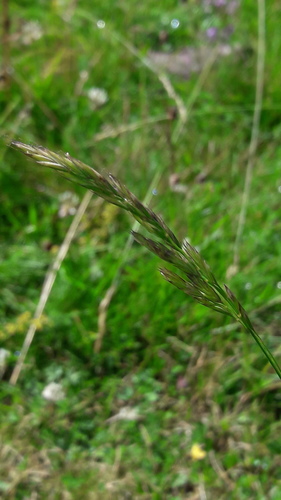
Chewing's Fescue
Festuca nigrescens
A champion of shade and poor soils, Chewing's Fescue is the 'fine-haired' beauty of the grass world. This resilient bunchgrass provides a lush, deep-green carpet that stays vibrant long after other grasses have faded.
Quick Identification
Size
Foliage typically reaches 6–12 inches (15–30 cm) in height, with flowering culms extending up to 24–36 inches (60–90 cm).
Colors
Deep, dark green foliage; seed heads may appear light brown or purplish; base of the plant often shows reddish-brown sheaths.
Key Features
- Dense, bunch-forming growth habit without rhizomes
- Fine, needle-like leaf blades approximately 1mm wide
- Deep green color maintained throughout the winter
- Upright, compact panicles (seed heads) appearing in early summer
When You’ll See Them
Geographic range
Where Does the Chewing's Fescue Live?
Native to the mountain ranges and temperate regions of Europe, Chewing's Fescue has been successfully introduced to nearly every temperate corner of the globe. It is widely naturalized throughout the northern United States and Canada, as well as the British Isles, New Zealand, and parts of Australia. Because it excels in cool, humid environments, it is particularly dominant in coastal regions and high-latitude grasslands where it is often used in ecological restoration and sustainable landscaping.
Basemap © OpenStreetMap contributors
Behavior
In a backyard ecosystem, this grass behaves as a foundational species. It provides vital structural cover for ground-dwelling insects and small mammals. During the summer heat, it may enter a state of semi-dormancy to conserve moisture, but it is one of the first plants to 'green up' and resume active growth when autumn rains and cooler temperatures return. Its high shoot density makes it highly resistant to weed encroachment once established.
EverydayEarth exclusive
Camera Tips
Lighting is the most critical factor for plant photography. The best time to record is during the 'golden hour'—the hour after sunrise or before sunset. Low-angle sunlight will catch the edges of the fine blades, creating a glowing effect that distinguishes Chewing's Fescue from coarser lawn grasses. If your camera allows for manual white balance, ensure it is set correctly to preserve the species' signature deep green hue, which can sometimes appear washed out in harsh midday sun.
Since this grass is a magnet for small backyard creatures, use it as a 'stage.' Position your camera at the edge of a fescue patch where it meets a garden path or a woodpile. Small mammals like voles and chipmunks often use the dense fescue cover for protection. By setting your camera's motion trigger sensitivity to high, you can catch the movement of the grass swaying in the wind, but be prepared for many 'false' triggers. For a truly unique project, set your camera to time-lapse mode, taking one photo every few days from March through June to document the dramatic emergence of the tall flower stalks from the low-lying foliage.
Similar Species
Species that look similar or are commonly confused with Chewing's Fescue.
Frequently Asked Questions
Record Chewing's Fescue at your habitat
Connect a camera to start building your own species record — AI identifies every visitor automatically.