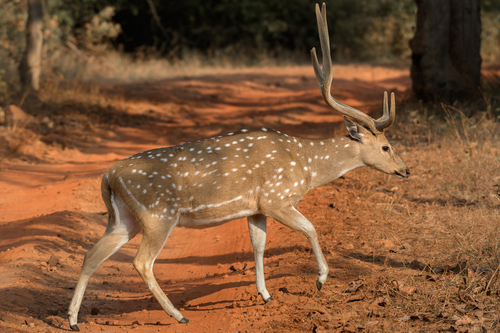
Chital
Axis axis
With its striking white-spotted coat and elegant antlers, the Chital is often considered the most beautiful deer species in the world. Thriving in the sun-dappled forests of South Asia and beyond, these social grazers bring a touch of wild majesty to any backyard camera setup.
Quick Identification
Size
Shoulder height: 70-90 cm (28-35 in); Weight: 40-90 kg (88-200 lb)
Colors
Rufous to golden-brown coat with permanent white spots; white underparts, throat, and tail underside; males feature dark facial markings.
Key Features
- Permanent white spots on a reddish-brown coat year-round
- Three-pronged antlers on males reaching up to 1 meter
- White throat patch and a dark stripe running down the spine
- Elegant, slender build with large, sensitive ears
When You’ll See Them
Geographic range
Where Does the Chital Live?
The Chital is native to the lush and varied landscapes of the Indian subcontinent, thriving across India, Sri Lanka, Nepal, and Bhutan. Beyond its native lands, this adaptable species has established significant wild populations in Australia, the United States—most notably in Texas and Hawaii—as well as parts of South America and Eastern Europe. In its native range, it favors the ecotones between dense forests and open meadows where forage and cover are both within reach.
Basemap © OpenStreetMap contributors
Behavior
Chital are highly social animals, typically found in herds of 10 to 30 individuals, though these groups can swell into the hundreds in favorable conditions. They exhibit a fascinating symbiotic relationship with langur monkeys; the monkeys drop fruit and leaves from the canopy while the deer maintain a lookout for predators on the ground. When a predator like a tiger or leopard is spotted, the chital emit a sharp, high-pitched barking alarm call that alerts the entire forest.
These deer are primarily crepuscular, meaning they are most active during the twilight hours of dawn and dusk. In human-populated areas, they often become more nocturnal to avoid conflict. While naturally shy, chital in protected parks or suburban fringes can become quite habituated to humans, though they remain alert and ready to flee at the slightest sign of danger.
EverydayEarth exclusive
Camera Tips
To capture the perfect shot of a Chital, place your camera along 'deer highways'—clearly visible worn paths through tall grass or forest undergrowth. Set your camera at a height of about 3 to 4 feet (chest height for an adult male) to ensure you capture the full body and those impressive antlers. Angling the camera at a 45-degree angle to the trail, rather than perpendicular, will give you a longer trigger window and more dynamic shots of the deer as they approach.
Chital are frequent visitors to water sources, especially during the dry season. If you have a pond or a large birdbath on your property, aim your camera there. In terms of lures, while local regulations vary, Chital are naturally attracted to salt licks or mineral blocks. However, the best 'natural' bait is often a well-maintained patch of clover or young grass. They are also fond of fallen fruit, so placing a camera under a fruiting tree like a mango or guava can yield excellent results.
Since they are most active during the low-light hours of dawn and dusk, ensure your camera has a high-quality infrared flash to avoid 'white-out' photos while still capturing the details of their spots. Set your trigger speed to the fastest possible setting—Chital are incredibly skittish and can bolt in a split second. A burst mode of 3-5 photos per trigger is ideal for capturing their graceful movement or the sudden turn of a head when they detect a sound.
Similar Species
Species that look similar or are commonly confused with Chital.
Frequently Asked Questions
Record Chital at your habitat
Connect a camera to start building your own species record — AI identifies every visitor automatically.