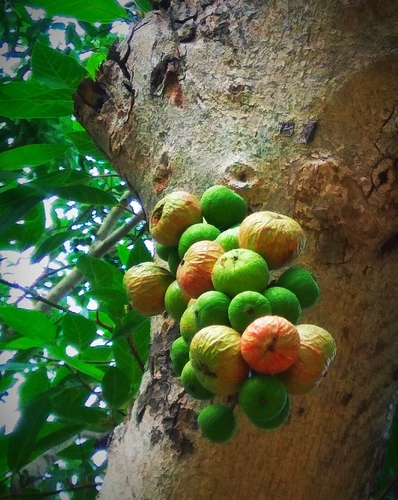
Cluster Fig
Ficus racemosa
A biological powerhouse of the tropics, the Cluster Fig feeds an entire ecosystem by growing massive bundles of fruit directly from its trunk. This 'ever-fruiting' giant is the ultimate magnet for backyard wildlife, from monkeys to rare butterflies.
Quick Identification
Size
Height: 10–30 meters (33–100 feet); Leaf length: 7–15 centimeters (3–6 inches)
Colors
Greyish-green bark; bright green leaves; fruit transitions from green to orange-red or deep red when ripe
Key Features
- Cauliflorous fruiting—dense clusters of figs grow directly from the trunk and main branches
- Large, coarse, ovate leaves with a rough texture
- Smooth, reddish-grey bark that may flake in older specimens
- Extensive, wide-reaching root system
When You’ll See Them
Geographic range
Where Does the Cluster Fig Live?
The Cluster Fig is native to the vast tropical regions of Asia and Oceania. Its core range stretches from Pakistan and India through Southeast Asia, including Thailand, Vietnam, and Malaysia, extending south into northern Australia. It is a common sight in the moist lowland forests and riverine environments of these regions, where it thrives in the heat and humidity of the tropics.
Basemap © OpenStreetMap contributors
Behavior
The Cluster Fig is a keystone species in tropical ecosystems, serving as a reliable biological clock for local wildlife. Unlike many trees that follow a strict seasonal fruiting cycle, the Cluster Fig can produce fruit multiple times a year, often providing a critical food source during 'lean' seasons when other plants are dormant. This makes it a central hub for biodiversity, attracting everything from insects to large mammals.
The tree's most fascinating biological behavior is its obligate mutualism with fig wasps. Each fig is actually an inverted flower (syconium) that requires a specific species of wasp to enter through a tiny hole to pollinate it. In exchange, the wasp uses the fig as a nursery for its larvae. This complex interaction ensures the survival of both the tree and the insect, creating a microscopic world of activity within every fruit.
EverydayEarth exclusive
Camera Tips
Capturing wildlife around a Cluster Fig is unique because the fruit grows directly on the trunk (cauliflory). This allows you to mount your AI-powered camera at eye level, roughly 3 to 5 feet off the ground, pointed directly at a large cluster of ripening figs. Unlike most fruiting trees where the action happens high in the canopy, the Cluster Fig brings the 'buffet' down to where your camera can see it clearly.
For the best results, use a camera with a fast trigger speed and high-resolution video capabilities. During the day, you are likely to capture squirrels, macaques, and a variety of colorful birds like barbets and pigeons. To capture the fascinating nocturnal visitors, such as fruit bats (flying foxes) or civets, ensure your camera has a strong infrared flash that doesn't wash out the details of the tree's bark.
Position your camera facing north or south to avoid direct sun glare on the lens, which can be problematic in the bright tropical sun. If you are targeting butterflies like the Two-brand Crow, use a camera with a 'macro' or close-focus capability if available. Check the fig clusters regularly; when they begin to turn from green to orange, that is the signal to ensure your batteries are fresh and your SD card is empty, as the animal traffic is about to peak.
Similar Species
Species that look similar or are commonly confused with Cluster Fig.
Frequently Asked Questions
Record Cluster Fig at your habitat
Connect a camera to start building your own species record — AI identifies every visitor automatically.