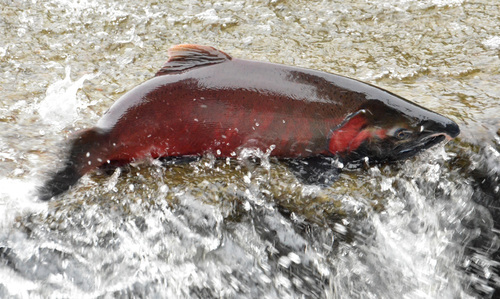
Coho Salmon
Oncorhynchus kisutch
Witness the incredible journey of the Silver Salmon as it transitions from the deep ocean to the rushing streams of the Pacific Northwest. Known for their acrobatic leaps and brilliant red spawning colors, Coho are a true symbol of wild river health.
Quick Identification
Size
24-28 inches (60-71 cm) in length and 7-11 lbs (3.2-5 kg); trophy specimens can reach 39 inches (100 cm) and 36 lbs (16 kg)
Colors
Ocean phase is silver with dark blue backs; spawning phase features dark metallic green heads and brilliant red sides, with males becoming much darker than females
Key Features
- Small black spots on the back and upper lobe of the tail only
- White or light grey gums with a black tongue
- Pronounced hooked snout (kype) in spawning males
- Square-shaped tail with translucent silver coloring
When You’ll See Them
Geographic range
Where Does the Coho Salmon Live?
The Coho Salmon is a native of the North Pacific Ocean, spanning a vast arc from the chilly waters of northern Japan and Russia across the Bering Sea to Alaska. Its range extends south along the western coast of North America, reaching as far as Monterey Bay, California. Beyond their native marine haunts, they have been successfully introduced to the North American Great Lakes, where they have established self-sustaining populations that provide popular inland fishing opportunities.
Basemap © OpenStreetMap contributors
Behavior
Coho salmon are anadromous fish, meaning they spend their adult lives in the saltwater of the Pacific Ocean before returning to the freshwater streams of their birth to spawn. They are famous for their persistence and leaping ability, often seen jumping over waterfalls and log jams to reach their home tributaries. During their time in the ocean, they are highly social and form large schools to hunt, but upon entering freshwater, they become solitary and highly territorial as they compete for the best spawning gravel.
Unlike other salmon species that might spawn in the main stem of large rivers, Coho prefer smaller, clear-running coastal streams. They often wait in estuaries for the first heavy autumn rains to raise river levels before beginning their upstream trek. After spawning, both males and females die, providing a massive pulse of nutrients from the ocean that sustains the entire forest ecosystem, from eagles and bears to the very trees lining the riverbanks.
EverydayEarth exclusive
Camera Tips
Capturing Coho Salmon on camera requires a specialized approach, as they are most visible to backyard observers during their upstream migration. For those with a creek or river on their property, an underwater action camera mounted on a weighted tripod or a PVC pole mount is the most effective tool. Position the camera in a 'pool' area—a deeper, slower-moving section of the stream—just downstream from a small riffle or log jam. This is where salmon congregate to rest before attempting the next obstacle.
If you are using a traditional trail camera, aim it at a shallow crossing or a low-profile waterfall where the fish are forced to break the surface. Set the camera to Video or Burst mode with a high trigger speed, as salmon move quickly through the frame. To reduce glare on the water's surface, which can wash out the image, try to position the camera so it is looking down at a 45-degree angle from a high bank, or use a polarizing filter if your camera housing allows it. The best time for footage is usually 48 hours after a significant rain event, as the rising water levels trigger the fish to move upstream.
While bait isn't used for camera trapping salmon, you can 'lure' them into the frame by maintaining natural cover. Leaving fallen logs in the stream (where legal) creates the slow-water eddies that salmon naturally seek out. In many regions, Coho are most active in the low light of dawn and dusk, so ensure your camera has high-quality infrared LEDs for nighttime visibility, or choose a spot with good ambient light for daytime shots. Be sure to secure your equipment with a safety cable, as autumn floods can quickly sweep away unsecured gear.
Similar Species
Species that look similar or are commonly confused with Coho Salmon.
Frequently Asked Questions
Record Coho Salmon at your habitat
Connect a camera to start building your own species record — AI identifies every visitor automatically.