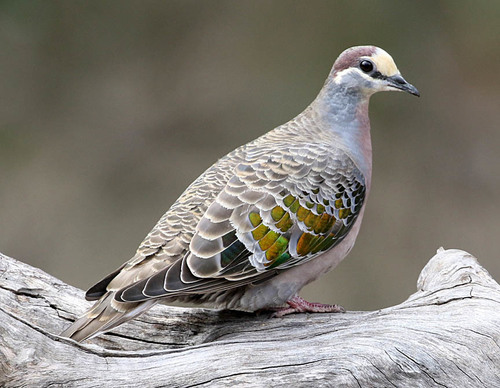
Common Bronzewing
Phaps chalcoptera
With wings that shimmer like polished metal and a soothing, rhythmic call, the Common Bronzewing is a jewel of the Australian bush. These hardy pigeons are masters of the ground, bringing a touch of iridescent beauty to gardens and woodlands alike.
Quick Identification
Size
30-36 cm (12-14 inches) long; weight 200-500g (7-17 oz)
Colors
Brownish-grey upperparts; iridescent wing patches of bronze, green, and gold; males have a creamy-white forehead and pinkish breast.
Key Features
- Iridescent metallic wing patches that shimmer in light
- Mournful, low-pitched 'whooo' call repeated rhythmically
- Pale forehead and white line under the eye
- Stocky, powerful build with a relatively small head
When You’ll See Them
Geographic range
Where Does the Common Bronzewing Live?
Native to the Australian continent, the Common Bronzewing is one of the most widespread birds in the region. It is found across almost the entire mainland, including the arid interior and coastal regions, as well as throughout Tasmania. While it generally avoids the densest rainforests and the most barren, waterless deserts, it has successfully adapted to human-modified landscapes, making it a frequent resident of rural fringes and leafy suburban corridors across every Australian state.
Basemap © OpenStreetMap contributors
Behavior
Common Bronzewings are primarily ground-dwelling birds that spend much of their day foraging for seeds under the cover of shrubs and trees. Despite their heavy, stocky build, they are incredibly fast and powerful flyers, often taking off with a loud, clattering wing-beat if startled. They are generally solitary or seen in pairs, though larger groups may congregate around reliable water sources during dry spells or late in the afternoon.
These pigeons are known for being cautious and somewhat shy around humans, often freezing in place or walking away through the undergrowth rather than flying. Their most distinctive social behavior is their rhythmic advertising call, which can be heard from a significant distance at dawn and dusk. While they aren't as bold as some common garden birds, they become regular visitors to backyards that provide plenty of ground cover and a safe, quiet place to drink.
EverydayEarth exclusive
Camera Tips
To capture the stunning iridescence of the Common Bronzewing, camera placement is critical. Because they are ground-feeders that rarely use elevated feeders, mount your AI camera low—about 30 to 50 centimeters (12-20 inches) off the ground. Angle the camera toward a flat, cleared area under a wattle tree or near a ground-level birdbath. They are most predictable during the 'golden hour' before sunset when they make their daily trip to water, so ensure your camera is positioned to catch the low sun hitting their wings to reveal those brilliant bronze and green colors.
These birds are notoriously wary of sudden movements and new objects. If you're setting up a trail camera, use a 'no-glow' infrared flash for low-light shots to avoid spooking them as they arrive for their evening drink. Since they often walk into the frame rather than landing directly in front of the lens, set your camera to take a burst of 3-5 photos or a short video clip (15-20 seconds). This ensures you capture them in a pose where their wings are flared or catching the light, rather than just seeing a grey bird walking away.
Food is a great motivator, but water is even better for this species. In drier months, a shallow, ground-level water dish is the most effective way to draw them in. If using bait, a mix of native seeds or specialized pigeon grain scattered on the ground will keep them in the camera's field of view longer as they forage. Be patient; it may take several days for a Bronzewing to trust a new camera setup, but once they identify it as safe, they will likely become daily visitors.
Similar Species
Species that look similar or are commonly confused with Common Bronzewing.
Brush Bronzewing
Slightly smaller with richer chestnut tones and a more distinct chestnut 'throat' patch; prefers denser coastal heath and scrub.
Crested Pigeon
Easily distinguished by its long, thin black head crest and more slender build; lacks the broad white forehead of the male Common Bronzewing.
Flock Bronzewing
Found in arid grasslands of the interior; has a much more striking black-and-white facial pattern.
Frequently Asked Questions
Record Common Bronzewing at your habitat
Connect a camera to start building your own species record — AI identifies every visitor automatically.