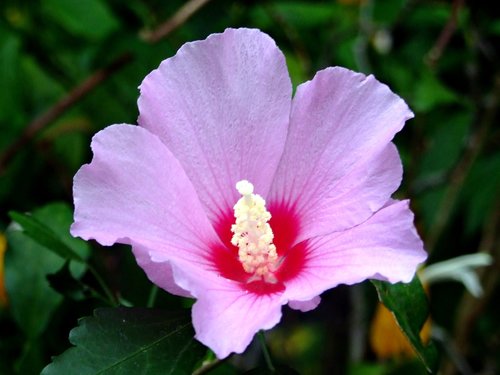
common hibiscus
Hibiscus syriacus
Transforming temperate gardens with a splash of tropical color, the common hibiscus is a late-summer masterpiece that serves as a vital hub for hummingbirds and butterflies.
Quick Identification
Size
Height: 2–4 m (7–13 ft); Spread: 1.5–3 m (5–10 ft)
Colors
Petals in shades of white, pink, lavender, or light blue; typically features a prominent dark red or purple 'eye' at the base of the throat.
Key Features
- Trumpet-shaped flowers 3-4 inches wide
- Prominent central column of stamens
- Three-lobed, coarsely toothed dark green leaves
- Upright, vase-shaped woody structure
When You’ll See Them
Loading activity data...
Behavior
The common hibiscus, widely known as the Rose of Sharon, is a deciduous shrub that stands out for its late-season performance. While most flowering shrubs peak in spring, this species waits for the heat of mid-to-late summer to burst into bloom. It is a resilient plant, often found in suburban landscapes where it provides a structural backdrop for gardens and serves as a reliable nectar source when other flowers have faded.
Because it is a woody perennial, it grows slowly into a multi-stemmed shrub or a small tree. It is highly attractive to a variety of pollinators, specifically those with long tongues or beaks. Humans often use it as a living privacy screen or a focal point because of its tropical appearance and ability to withstand urban stresses like pollution and heat.
EverydayEarth exclusive
Camera Tips
Capturing the common hibiscus on camera offers a unique opportunity to document the 'slow' movement of nature. Because the plant is stationary, it is the ideal subject for a time-lapse sequence. Mount your camera on a sturdy tripod or a nearby fence post, focusing on a cluster of closed buds. Set your interval to capture one frame every 10 minutes starting just before sunrise. This will allow you to record the dramatic unfurling of the petals as the morning sun hits the plant.
For those interested in the wildlife that visits the hibiscus, camera placement is key. Position your camera 3 to 5 feet away from the most vibrant blooms, aiming the lens slightly upward to catch the blue sky in the background, which makes the flower colors pop. Use a fast shutter speed or high-sensitivity motion trigger to capture the rapid movements of Ruby-throated Hummingbirds and various swallowtail butterflies that frequent these flowers for nectar. If your camera has a 'macro' or close-focus mode, this is the time to use it to capture the intricate details of the central stamen column.
Pay close attention to lighting. The best shots occur during the 'golden hours'—shortly after sunrise or before sunset—when the light is soft and warm. Harsh midday sun can wash out the delicate colors of the petals. If you are using a trail camera, ensure it is positioned facing North or South to avoid direct lens flare from the sun. During the peak heat of August, check your lens for condensation or dew in the early morning, as this can blur your shots. A quick wipe with a microfiber cloth before the sun fully rises ensures your time-lapse stays crystal clear.
Similar Species
Species that look similar or are commonly confused with common hibiscus.
Chinese Hibiscus
Chinese hibiscus has much glossier leaves and is a tropical plant that cannot survive cold winters, unlike the hardy Rose of Sharon.
Hollyhock
Hollyhocks grow on tall, unbranched vertical stalks and are biennials or short-lived perennials, whereas common hibiscus is a long-lived woody shrub.
Confederate Rose
This species has much larger, maple-like leaves and flowers that change color from white to deep pink over the course of a single day.
Frequently Asked Questions
Record common hibiscus at your habitat
Connect a camera to start building your own species record — AI identifies every visitor automatically.