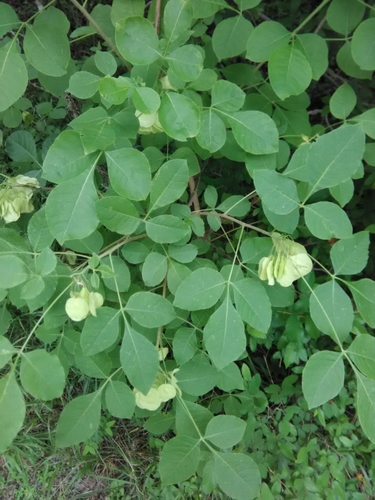
common hoptree
Ptelea trifoliata
A hidden gem of the citrus family, the common hoptree is the ultimate host plant for the magnificent Giant Swallowtail butterfly and a hardy addition to any wildlife garden.
Quick Identification
Size
A large shrub or small tree reaching 5–10 meters (15–30 feet) in height with a spread of 3–6 meters (10–20 feet).
Colors
Glossy dark green leaves turning yellow in autumn; small greenish-white flowers; papery, tan-colored circular seed pods (samaras).
Key Features
- Trifoliate leaves (three leaflets) that release a citrus or musky scent when crushed
- Flat, circular, winged seeds resembling thin wafers
- Smooth, gray-brown bark that becomes slightly scaly with age
- Alternative leaf arrangement on slender, reddish-brown twigs
When You’ll See Them
Geographic range
Where Does the common hoptree Live?
The common hoptree is native to the North American continent, boasting a broad distribution that stretches from the southern regions of Ontario and Quebec in Canada down through the eastern and central United States. Its range extends as far west as the Great Plains and reaches southward into the mountainous regions of Mexico. It is particularly common in the Midwest and the Ozarks, where it thrives in the calcium-rich soils of limestone bluffs and riparian corridors.
Basemap © OpenStreetMap contributors
Behavior
The common hoptree is a hardy, shade-tolerant species that often grows as an understory tree or a thicket-forming shrub. While it is a member of the citrus family (Rutaceae), it lacks thorns. It is perhaps most famous in the wildlife gardening community for being a primary host plant for the Giant Swallowtail butterfly, the largest butterfly in North America. The tree’s flowers are inconspicuous but highly fragrant, emitting a sweet scent that attracts a diverse array of pollinators, including bees, flies, and specialized beetles.
Ecologically, the hoptree acts as a bridge between forest and field, often found at the edge of woods where it provides cover for small mammals and nesting sites for birds. Its common name stems from the historical use of its bitter seeds as a substitute for hops in beer brewing by early settlers. Despite its 'stinking ash' nickname—derived from the pungent odor of its crushed leaves and bark—it is a clean, manageable tree for backyard landscapes that supports a high level of biodiversity.
EverydayEarth exclusive
Camera Tips
When monitoring a common hoptree with an AI-powered camera, the real 'stars' of the show are the insects it hosts. To capture the incredible life cycle of the Giant Swallowtail butterfly, position your camera 12–24 inches from a cluster of fresh leaf growth. Look for 'bird dropping' caterpillars—young larvae that mimic bird excrement to avoid predators. A camera with a short focal length or macro capability is ideal for these unique shots.
During the late spring blooming period (May to June), angle your camera toward the flower clusters to document a high volume of pollinator activity. Because the flowers are often greenish and blend in with the foliage, use a camera with high-resolution video to distinguish between the various species of bees and wasps that visit. Setting your camera to 'motion-activated' with a short recovery time will ensure you catch the fast-moving butterflies as they deposit eggs on the undersides of the leaves.
In the autumn, the hoptree provides a different visual interest. The 'wafer' seeds hang in heavy clusters and turn a beautiful papery tan. This is an excellent time to set up a time-lapse to record the transition of leaf color and the eventual dispersal of seeds by the wind. If your camera is placed near the base of the tree, you may also capture songbirds or small rodents foraging for insects or shelter within the low-branching canopy.
Similar Species
Species that look similar or are commonly confused with common hoptree.
Frequently Asked Questions
Record common hoptree at your habitat
Connect a camera to start building your own species record — AI identifies every visitor automatically.