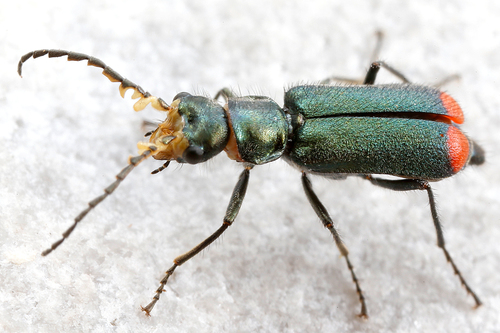
Common Malachite-beetle
Malachius bipustulatus
A shimmering jewel of the spring meadow, the Common Malachite-beetle is a master of disguise and a friend to gardeners. With its metallic green coat and bright red 'tail lights,' it is a stunning example of backyard biodiversity.
Quick Identification
Size
5–7 mm (0.2–0.3 inches) in length
Colors
Metallic iridescent green or turquoise body; distinctive red or orange spots at the tips of the wing cases (elytra)
Key Features
- Iridescent green metallic body
- Bright red-orange spots at the posterior of the wing cases
- Soft-bodied, elongated shape
- Males have specialized orange sensory organs on the front of the head
When You’ll See Them
Geographic range
Where Does the Common Malachite-beetle Live?
The Common Malachite-beetle is primarily native to Europe and Western Asia, where it is one of the most frequently recorded members of its family. It is widespread across the United Kingdom and continental Europe, ranging from Scandinavia down to the Mediterranean and North Africa. While its heartland remains the temperate regions of the Old World, it has been occasionally introduced to parts of North America, though it remains much more localized there.
Basemap © OpenStreetMap contributors
Behavior
During mating season, these beetles engage in a fascinating chemical ritual. Males possess specialized glands on their heads called 'excitors.' They offer secretions from these glands to females; if the female finds the chemical 'gift' suitable, she will allow the mating process to proceed. They are entirely harmless to humans and are considered beneficial garden residents due to their appetite for common pests.
EverydayEarth exclusive
Camera Tips
Lighting is the most critical factor for this species. The 'malachite' green color is structural, meaning it looks most spectacular in direct, bright sunlight. Aim your camera toward the south or southeast to catch the morning and midday sun, which will make the iridescent exoskeleton pop against the green foliage. Avoid using a flash if possible, as it can cause harsh reflections on their shiny wing cases.
Since these beetles are highly active and fast-moving, use a fast shutter speed or a high-frame-rate video setting. They often scuttle to the underside of leaves if they feel a vibration or shadow, so place your camera in a low-traffic area of the garden. If you are using a backyard AI station, try planting a patch of Ox-eye Daisies or Hawkbit directly in front of the lens to create a natural stage for their mid-day foraging and mating displays.
Similar Species
Species that look similar or are commonly confused with Common Malachite-beetle.
Frequently Asked Questions
Record Common Malachite-beetle at your habitat
Connect a camera to start building your own species record — AI identifies every visitor automatically.