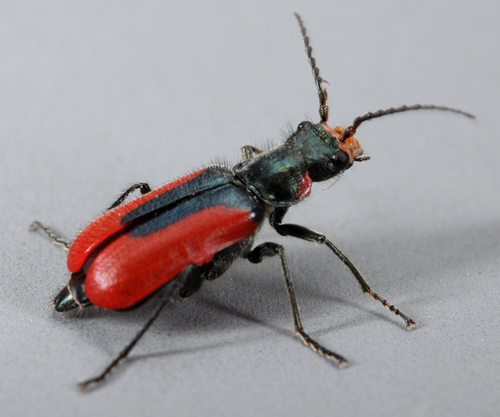
Scarlet Malachite Beetle
Malachius aeneus
A jewel of the summer meadow, the Scarlet Malachite Beetle captivates with its brilliant metallic green and fiery red hues. This tiny predator is a welcome sight for gardeners and a master of the midday sun.
Quick Identification
Size
6-8 mm (0.24-0.31 inches) in length
Colors
Metallic blue-green head and thorax; vibrant scarlet-red wing covers (elytra) with dark metallic patches at the base and tips
Key Features
- Striking metallic green thorax and head
- Bright scarlet red wing covers with dark green-black markings
- Soft-bodied appearance compared to other beetles
- Large, prominent black eyes and serrated antennae
When You’ll See Them
Geographic range
Where Does the Scarlet Malachite Beetle Live?
The Scarlet Malachite Beetle is originally native to the Palearctic region, with a broad distribution across Europe and temperate Asia. It was introduced to North America in the mid-19th century and has since become widespread across the United States and Southern Canada. It is particularly well-established in the United Kingdom and across central Europe, where it thrives in landscapes that blend traditional agriculture with wild meadow margins.
Basemap © OpenStreetMap contributors
Behavior
The Scarlet Malachite Beetle is a diurnal insect, meaning it is most active during the warmest parts of the day. They are frequently observed scrambling over the petals of flowers, where they feed on pollen and nectar. Despite their dainty appearance, they are also opportunistic predators, often patrolling foliage to hunt for small, soft-bodied insects like aphids or other larvae.
These beetles are known for their 'soft-winged' nature; unlike many beetles with hard, shell-like protection, their elytra are relatively flexible. During the mating season, males use special structures at the base of their antennae to release pheromones that attract females. They are generally harmless to humans and are considered beneficial visitors to gardens and farms due to their predatory larvae.
EverydayEarth exclusive
Camera Tips
To capture high-quality images of the Scarlet Malachite Beetle, you must focus on 'flower-level' photography. These beetles spend the majority of their time on flat-topped, bright flowers such as daisies, hogweed, or buttercups. Position your AI-powered camera or macro-lens trail camera approximately 12 to 24 inches from a cluster of these flowers, ensuring the lens is angled slightly upward or level with the flower heads to capture the beetle's metallic sheen against the sky or foliage.
Since these insects are tiny, traditional motion triggers may struggle to detect them. It is highly recommended to use a camera with a high-frame-rate video mode or a 'time-lapse' setting that fires every few seconds during peak daylight hours. If your camera allows for manual focus, set it to a fixed macro point on a specific bloom and wait for the beetle to land within the focus plane.
Lighting is your best friend when filming Malachius aeneus. Their metallic green thorax and scarlet wing covers reflect sunlight beautifully. For the best results, set up your camera on clear, sunny days when the light is bright enough to allow for a fast shutter speed, which is necessary to freeze the beetle's quick, jerky movements as it searches for pollen.
You can 'bait' these beetles by planting native flowering species that produce high amounts of pollen. They are particularly fond of yellow and white blossoms. Avoid using pesticides in the area, as these beetles are sensitive to chemicals and provide natural pest control by eating aphids. A small, unmown patch of grass near your camera setup will also encourage larvae to develop nearby, increasing your chances of seeing adults in the spring.
Similar Species
Species that look similar or are commonly confused with Scarlet Malachite Beetle.
Frequently Asked Questions
Record Scarlet Malachite Beetle at your habitat
Connect a camera to start building your own species record — AI identifies every visitor automatically.