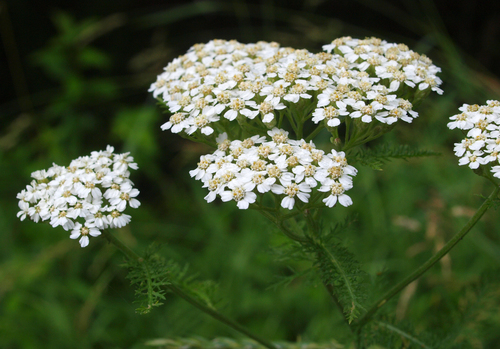
common yarrow
Achillea millefolium
A hardy, feathered beauty of the meadow, common yarrow is a master of survival and a favorite of backyard pollinators.
Quick Identification
Size
30–100 cm (12–40 inches) in height; spread of 15–45 cm (6–18 inches)
Colors
Creamy white to soft pink flower clusters; deep green, fern-like foliage
Key Features
- Feathery, finely divided leaves
- Flat-topped, umbrella-like flower clusters
- Pungent, herbal aroma when leaves are crushed
When You’ll See Them
Geographic range
Where Does the common yarrow Live?
Common yarrow is a cosmopolitan species native to the temperate regions of the Northern Hemisphere, including North America, Europe, and Asia. It is remarkably adaptable, thriving from the coastal dunes of the Atlantic to the high alpine meadows of the Rocky Mountains. While native to these vast regions, it has also been naturalized in Australia and New Zealand, where it was originally introduced for its medicinal and ornamental value.
Basemap © OpenStreetMap contributors
Behavior
Common yarrow is a resilient perennial that plays a foundational role in many backyard ecosystems. Unlike mobile wildlife, yarrow's 'behavior' is defined by its impressive colonization strategy and its relationship with the sun. It spreads both by seed and through creeping underground rhizomes, often forming dense mats of fern-like foliage that provide excellent ground cover for small ground-dwelling insects and spiders.
As a highly communicative plant, yarrow releases a strong, spicy scent when touched or bruised, a defense mechanism meant to deter certain herbivores. However, its flowers are exceptionally social; the flat-topped 'landing pads' are specifically structured to support a wide variety of pollinators. Throughout the day, yarrow serves as a bustling hub for ladybugs, hoverflies, and parasitic wasps, making it a critical component for natural pest control in suburban gardens.
EverydayEarth exclusive
Camera Tips
Capturing common yarrow on your wildlife camera requires a shift in strategy from tracking movement to documenting interaction and growth. To see the plant at its best, set your camera for a time-lapse during the late spring. By taking one photo every hour for two weeks, you can capture the dramatic transition from a tight green bud to a fully expanded white 'umbel.' Position the camera on a short tripod or a ground stake approximately 24 inches from the plant to maintain a clear focus on the delicate leaf textures.
Because yarrow is a magnet for beneficial insects, it is the perfect location for a 'Pollinator Cam.' Set your camera to its highest trigger sensitivity and use a macro lens if available. Place the camera at the same height as the flower heads—usually 1 to 2 feet off the ground—to catch hoverflies, bees, and butterflies as they land. Since yarrow flowers are white and highly reflective, you may need to adjust your exposure settings downward (-1.0 or -2.0 EV) to prevent the highlights from blowing out in bright, midday sun.
Don't stop recording when the sun goes down. Many moths are attracted to the pale blossoms of common yarrow at night. Ensure your camera's infrared (IR) flash is active; the white flowers will glow brilliantly in IR, providing a high-contrast backdrop for nocturnal visitors. If your camera allows for video, set short 10-second clips to capture the swaying motion of the feathery leaves in the wind, which adds a beautiful, cinematic quality to your backyard wildlife footage.
Similar Species
Species that look similar or are commonly confused with common yarrow.
Frequently Asked Questions
Record common yarrow at your habitat
Connect a camera to start building your own species record — AI identifies every visitor automatically.