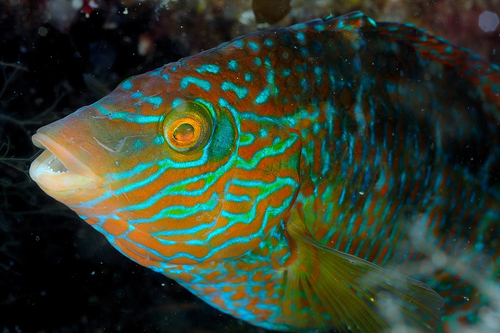
Corkwing Wrasse
Symphodus melops
A jewel of the Atlantic coast, the Corkwing Wrasse is famous for its intricate seaweed nests and brilliant, jewel-toned breeding colors.
Quick Identification
Size
Typically 15 to 20 cm (6 to 8 inches) in length, with a maximum reach of 25 cm (10 inches). Weight is generally under 300g (10.5 oz).
Colors
Highly variable; females and juveniles are usually mottled brown or greenish. Breeding males are vibrant with green, blue, and red patterns. Both sexes feature a distinct black spot on the tail base and a dark comma-shaped mark behind the eye.
Key Features
- Dark, comma-shaped spot behind the eye
- Black spot on the base of the tail fin
- Small mouth with thick, fleshy lips
- Serrated edge on the preoperculum (cheek bone)
When You’ll See Them
Geographic range
Where Does the Corkwing Wrasse Live?
Native to the temperate coastal waters of the eastern Atlantic Ocean, the Corkwing Wrasse is a staple of European and North African coastlines. Its range extends from the northern fjords of Norway and the British Isles down to the shores of Morocco and the Azores. It is also widely distributed across the Mediterranean and Adriatic Seas, thriving in shallow, sheltered environments where rock meets vegetation.
Basemap © OpenStreetMap contributors
Behavior
During the breeding season, 'territorial' males become master builders, meticulously constructing nests out of various types of seaweed in rock crevices. They are exceptionally protective of these nests, often seen hovering nearby to ward off intruders. They also play a vital role in the marine ecosystem as 'cleaner fish,' occasionally nibbling parasites off larger fish, a trait that has led to their use in sustainable salmon farming to control sea lice.
EverydayEarth exclusive
Camera Tips
Lighting is your biggest challenge underwater. Try to position the camera so the sun is behind it or directly overhead to illuminate the fish's iridescent scales. If the water is murky, move the camera closer to a 'cleaning station'—a specific rock or patch where wrasse are known to congregate. Since they are curious, they will often approach a stationary camera to inspect their reflection in the lens.
For those with coastal backyards or access to tide pools, a submerged camera near a crushed mussel or limpet can act as a powerful lure. The scent will quickly draw in local wrasse. Set your camera to a high frame rate (at least 60fps) because these fish move with quick, jerky pectoral fin movements that can appear blurred on slower settings. Avoid using artificial lights at night, as these fish 'sleep' in rock cracks and won't be active.
Similar Species
Species that look similar or are commonly confused with Corkwing Wrasse.
Frequently Asked Questions
Record Corkwing Wrasse at your habitat
Connect a camera to start building your own species record — AI identifies every visitor automatically.