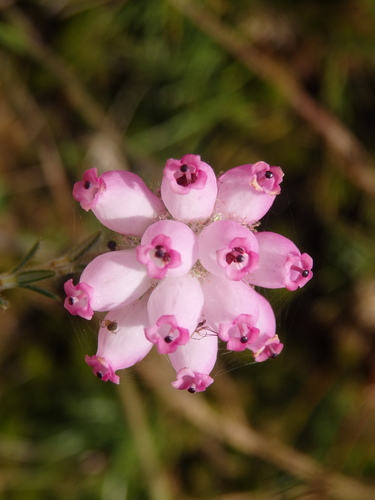
Cross-leaved Heath
Erica tetralix
A hardy gem of the European wetlands, Cross-leaved Heath paints bogs in shades of rose-pink with its delicate bell-shaped blooms. Its unique foliage and preference for wild, watery landscapes make it a favorite for moorland explorers.
Quick Identification
Size
15–60 cm (6–24 inches) tall with a spreading growth habit
Colors
Grey-green foliage; clusters of nodding, rose-pink urn-shaped flowers; rarely white
Key Features
- Leaves in distinctive whorls of four forming a cross shape
- Urn-shaped pink flowers clustered at the tips of stems
- Stems and leaves covered in sticky glandular hairs
- Evergreen dwarf shrub habit
When You’ll See Them
Geographic range
Where Does the Cross-leaved Heath Live?
Native to the Atlantic regions of Europe, the Cross-leaved Heath thrives in the moist, cool climates of the western maritime fringe. Its core range extends from the northern reaches of Scandinavia and the British Isles through the coastal regions of France and into the northern Iberian Peninsula. While it is a common sight in the boggy uplands of the UK and Ireland, it is rarely found far inland where the climate becomes more continental and dry.
Basemap © OpenStreetMap contributors
Behavior
Cross-leaved Heath is a resilient evergreen dwarf shrub that defines the character of Atlantic European wetlands. Unlike many other heathers, this species is a specialist of the wet, thriving in waterlogged, nutrient-poor, and highly acidic soils where other plants struggle to survive. It plays a vital role in its ecosystem by providing a crucial nectar source for long-tongued bees and acting as a host plant for various specialized moth species.
The plant exhibits a fascinating survival strategy: its leaves are covered in fine, sticky hairs that are thought to discourage crawling insects from climbing the stems to steal nectar without providing pollination services. This ensures that the plant's resources are reserved for flying pollinators like bumblebees, which can easily reach the hanging, bell-like flowers. While stationary, it forms dense, low-growing mats that help stabilize peat and provide shelter for micro-fauna in exposed moorlands.
EverydayEarth exclusive
Camera Tips
Capturing Cross-leaved Heath on an AI-powered trail camera requires a different approach than tracking wildlife. Because this plant grows low to the ground in boggy areas, mount your camera on a short stake or a specialized ground-level mount just 20-30 centimeters above the soil. Position the lens to face a healthy cluster of pink, bell-shaped flowers. This perspective is ideal for capturing the unique leaf arrangement and the delicate texture of the blooms.
While the plant itself is stationary, it is a hub of activity for backyard biodiversity. Set your camera to 'Time-Lapse' mode with a short interval (every 5-10 minutes) during the peak flowering months of July and August to observe the opening of the bells. Alternatively, use a high-sensitivity motion trigger to catch visiting pollinators like bumblebees and the rare Silver-studded Blue butterfly, which are attracted to the nectar.
Lighting is key for this species. The glandular hairs on the stems are best highlighted by 'backlighting'—position the camera so the sun is behind the plant during the early morning or late afternoon. This creates a glowing halo effect that makes the species pop in photos. Ensure you clear away any long, swaying grasses directly in front of the lens to prevent false triggers and keep the focus sharp on the heather's cross-shaped leaves.
Similar Species
Species that look similar or are commonly confused with Cross-leaved Heath.
Frequently Asked Questions
Record Cross-leaved Heath at your habitat
Connect a camera to start building your own species record — AI identifies every visitor automatically.