Deadly Nightshade
Atropa bella-donna
A plant of dark legend and striking beauty, Deadly Nightshade is famous for its bell-shaped flowers and lethal, ink-black berries.
Quick Identification
Size
Grows to a height of 0.6–1.5 metres (2–5 feet), often with a wide, branching spread.
Colors
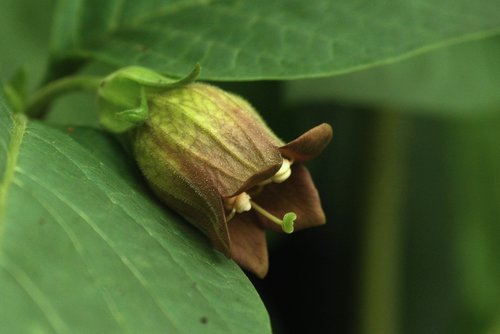
Dull green foliage with brownish-purple bell-shaped flowers and glossy, jet-black berries.
Key Features
- Dull purple or brownish bell-shaped flowers
- Large, shiny black berries seated on a green star-shaped calyx
- Broad, ovate leaves often growing in unequal pairs
- Sturdy, branching herbaceous stems that can appear slightly woody
When You’ll See Them
Geographic range
Where Does the Deadly Nightshade Live?
Native to the temperate regions of Europe and Western Asia, Deadly Nightshade's reach extends from the British Isles and Western Europe across to Ukraine and the Iranian province of Gilan. It has also successfully crossed oceans to become naturalized in parts of North America, including the northeastern United States and sections of Canada, as well as North Africa. This resilient plant typically favors locations where limestone or chalk is present in the soil, often appearing on the edges of old forests or in forgotten corners of rural estates.
Basemap © OpenStreetMap contributors
Behavior
Deadly Nightshade is a long-lived perennial herb that emerges from a thick, fleshy rootstock each spring. It is famous for its rapid growth during the summer months, producing distinctive downward-hanging flowers that bloom from June through August. Unlike many common garden plants, it has a preference for limestone-rich soils and often colonizes areas where the ground has been disturbed but then left to return to a wild state.
The plant’s primary 'behavior' is its sophisticated chemical defense system. Every part of the plant—from the roots to the berries—contains high concentrations of tropane alkaloids like atropine and scopolamine. These toxins serve to deter herbivores, though certain bird species have evolved an immunity to the fruit. To humans, the plant has a dual history: it was once used in the Renaissance to dilate pupils for beauty (hence 'belladonna' or 'beautiful lady') and has been used as both a potent medicine and a legendary poison.
EverydayEarth exclusive
Camera Tips
Capturing the dark allure of Deadly Nightshade on a backyard or trail camera is best achieved using a 'Time-Lapse' setting rather than a motion trigger. Since plants don't move enough to trip most PIR sensors, a time-lapse allows you to witness the fascinating transition from the dull purple bell flowers to the formation of the iconic, high-gloss black berries. Set your interval to one photo every 6 to 12 hours for a season-long study, or every 15 minutes to capture the flowers opening in the morning sun.
Position your camera low to the ground—about 12 to 24 inches—and tilt it slightly upward. This 'worm's eye view' highlights the way the flowers hang like bells and provides a clear shot of the star-like green calyx behind the berries. Because the berries are highly reflective, avoid using a direct flash at night; it will likely cause a bright white 'hot spot' on the fruit. Instead, rely on natural, dappled light or use an external, diffuse light source if you are filming at dusk.
Safety is paramount when working around this species. If you need to clear small branches or position the plant for a better shot, always wear gloves and wash your hands immediately afterward. To capture wildlife interactions, focus your camera on the berries in late August. You might catch glimpses of thrushes or other birds that are immune to the toxins feeding on the fruit, which is a rare and striking sight for any backyard naturalist.
Similar Species
Species that look similar or are commonly confused with Deadly Nightshade.
Frequently Asked Questions
Record Deadly Nightshade at your habitat
Connect a camera to start building your own species record — AI identifies every visitor automatically.