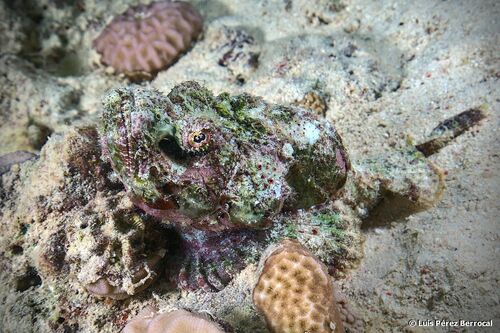
Devil Scorpionfish
Scorpaenopsis diabolus
The Devil Scorpionfish is the reef's most patient ghost, a venomous master of disguise that can vanish in plain sight against the coral floor.
Quick Identification
Size
Typically 15-25 cm (6-10 inches) in length, reaching a maximum of 30 cm (12 inches). Weight is usually between 0.5-0.9 kg (1-2 lbs).
Colors
Mottled patterns of brown, grey, and dull red to match reef rubble. Features startling 'flash' colors of bright orange, yellow, and black on the inner surface of the pectoral fins.
Key Features
- Distinctive humpbacked appearance with a deep notch behind the eyes
- Venomous dorsal spines capable of delivering a painful sting
- Large, fan-like pectoral fins with hidden bright warning colors
- Fringed skin flaps and cirri that mimic algae and reef debris
When You’ll See Them
Geographic range
Where Does the Devil Scorpionfish Live?
The Devil Scorpionfish is widely distributed across the tropical waters of the Indo-Pacific region. Its native range begins in the Red Sea and along the East African coast, extending eastward through the Indian Ocean to the shores of Australia, Southeast Asia, and southern Japan. It is particularly well-established in the Hawaiian Islands and across many of the central Pacific archipelagos, though it has not been introduced to Atlantic waters.
Basemap © OpenStreetMap contributors
Behavior
Socially, these fish are solitary and territorial, rarely interacting with others unless mating. While they are not naturally aggressive toward humans, they represent a significant hazard due to their venomous dorsal spines. When threatened, rather than swimming away immediately, the Devil Scorpionfish will flare its pectoral fins to reveal startling bright colors on the underside—a behavior known as aposematism meant to warn off attackers before they get too close. If this fails, its primary defense is its potent neurotoxin.
EverydayEarth exclusive
Camera Tips
Lighting is the most critical factor for a high-quality capture. As water absorbs red light, a Scorpionfish filmed under natural light at depth will appear a dull, flat grey. Use a dedicated underwater video light with a high CRI (Color Rendering Index) to bring out the intricate mottled textures of their skin and the brilliant orange hidden beneath their fins. Positioning the camera near a 'cleaning station' or a patch of reef with high small-fish activity increases your chances of catching a strike on film.
For the best results, use a macro lens or a close-up filter if your camera supports it. These fish often remain completely still even when a lens is just inches away, allowing for incredible detail of their venomous spines and iris patterns. However, safety is paramount: never touch the fish or the surrounding rocks while positioning your gear, as their venomous sting is medically significant and can be excruciatingly painful. Wear protective gloves and maintain neutral buoyancy to avoid disturbing the habitat.
Similar Species
Species that look similar or are commonly confused with Devil Scorpionfish.
Frequently Asked Questions
Record Devil Scorpionfish at your habitat
Connect a camera to start building your own species record — AI identifies every visitor automatically.