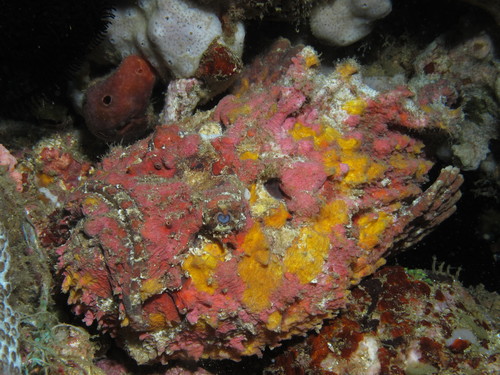
Reef Stonefish
Synanceia verrucosa
The Reef Stonefish is the world's most venomous fish, a master of disguise that hides in plain sight among the corals. With its warty skin and lethal spines, it represents one of nature's most perfect examples of ambush evolution.
Quick Identification
Size
Typically 30-40 cm (12-16 inches) in length; can weigh up to 2.4 kg (5.3 lbs).
Colors
Mottled brown, grey, and dull orange; skin is often covered in algae and sediment to mimic reef rubble.
Key Features
- Warty, scale-less skin texture
- Thirteen thick venomous dorsal spines
- Large, upward-turned mouth and eyes
- Broad, fan-like pectoral fins used for burying
When You’ll See Them
Behavior
The Reef Stonefish is the ultimate master of camouflage, spending the vast majority of its life perfectly motionless. It often partially buries itself in the sand or wedges its body between coral rubble, becoming virtually indistinguishable from a common rock. This sedentary lifestyle is a highly evolved survival strategy; rather than wasting energy swimming, the stonefish waits for its environment to bring food directly to it.
As an ambush predator, its hunting technique is incredibly efficient. When a small fish or crustacean swims within range, the stonefish opens its mouth with such speed that it creates a vacuum, literally inhaling its prey in less than 0.015 seconds. While they possess the most potent venom of any known fish, they are not aggressive toward humans. Their venomous spines are purely defensive, designed to protect them from larger predators or accidental trampling.
EverydayEarth exclusive
Camera Tips
Capturing a Reef Stonefish on a trail or backyard camera requires specialized equipment and a lot of patience, as these fish are strictly aquatic. If your property borders a tropical reef or tide pool, you will need an action camera with high-quality underwater housing. Because these fish are masters of disguise, you shouldn't look for the fish itself; instead, look for 'suspicious' rocks near areas where small baitfish congregate. Place your camera on a weighted low-profile tripod directly on the seabed or sandy floor, angling it slightly upward to capture the stonefish's unique facial profile.
Since the Reef Stonefish is most active under the cover of darkness, lighting is your biggest hurdle. Use an external underwater LED video light positioned at a 45-degree angle from the lens. This 'side-lighting' technique highlights the warty texture of the fish's skin and prevents backscatter—the annoying white spots caused by light reflecting off particles in the water. Avoid using a direct flash, which can wash out the subtle patterns that make their camouflage so effective.
To get the best footage, set your camera to a time-lapse mode or use a motion-trigger if the software is sensitive enough for underwater use. Because the fish may stay still for hours, a 30-minute video might show no movement at all. Time-lapse allows you to condense hours of observation into a few seconds, making it much easier to spot the occasional gill movement or the lightning-fast strike when it feeds. If you are using a trigger, ensure it is set to high sensitivity to catch the split-second movement of the mouth.
Safety should be your first priority. Never reach into a crevice or settle your camera by hand without wearing thick, puncture-resistant reef boots and protective gloves. The dorsal spines can easily penetrate standard wetsuits and thin-soled shoes. Use a mounting arm or a long selfie stick to position the camera if you suspect a stonefish is nearby. If the 'rock' you are looking at appears to have a mouth or eyes, give it plenty of space and operate your gear remotely if possible.
Similar Species
Species that look similar or are commonly confused with Reef Stonefish.
Frequently Asked Questions
Record Reef Stonefish at your habitat
Connect a camera to start building your own species record — AI identifies every visitor automatically.