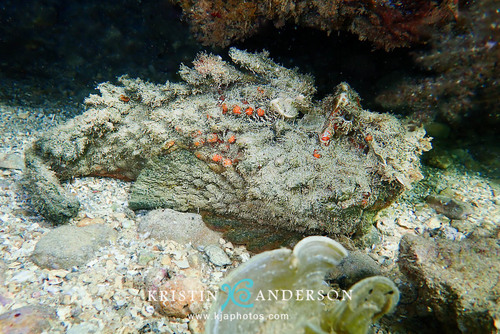
Estuarine Stonefish
Synanceia horrida
The Estuarine Stonefish is the world's most venomous fish and a true phantom of the shallows. Blending seamlessly into the muddy floors of the Indo-Pacific, it remains a fascinating example of nature's perfect camouflage.
Quick Identification
Size
Typically 30-45 cm (12-18 inches) in length, weighing up to 2.4 kg (5.3 lbs).
Colors
Mottled shades of earthy brown, dull grey, and ochre; often greenish due to algae growth on the skin.
Key Features
- Lumpy, rock-like skin covered in wart-like glands
- Large, upward-pointing mouth and deeply recessed eyes
- 13 stout dorsal spines connected to venom glands
When You’ll See Them
Geographic range
Where Does the Estuarine Stonefish Live?
The Estuarine Stonefish is widely distributed across the tropical waters of the Indo-Pacific. Its native range spans from the eastern coast of India through the Southeast Asian archipelago, including Indonesia, Malaysia, and the Philippines, and extends southward to the northern coastline of Australia. These fish thrive in the nutrient-rich, murky waters of coastal estuaries and are frequently found in the shallow intertidal zones of the Western Pacific islands.
Basemap © OpenStreetMap contributors
Behavior
The Estuarine Stonefish is a master of sedentary living, perfectly evolved to remain motionless for hours or even days. As a lethal ambush predator, it relies entirely on its camouflage to blend into the muddy or rocky substrate of its environment. It often partially buries itself in the silt, leaving only the top of its head and its venomous dorsal spines exposed. This behavior is not just for hunting; it is also its primary defense mechanism against potential predators.
While they appear sluggish, stonefish are capable of explosive movement when a meal swims by. They use a method called 'suction feeding,' where they open their massive jaws so quickly that it creates a vacuum, pulling the prey into their mouth in less than 0.015 seconds. Human interactions are almost always accidental; the fish does not attack but will erect its spines if stepped on, delivering a neurotoxin that is considered among the most painful and dangerous of any marine animal.
EverydayEarth exclusive
Camera Tips
Photographing an Estuarine Stonefish with an underwater trail camera is a lesson in spotting the 'invisible.' Because these fish prefer murky, silty environments like mangrove roots or estuary floors, visibility is your first hurdle. Place your camera on a weighted tripod or secure it to a dock piling just above the substrate. Aim the lens at a slight downward angle toward a patch of rubble or sandy clearing near a reef edge. Stonefish are highly territorial and tend to stay in the same spot for long periods, so if you find one, it is likely to remain in your frame for days.
Lighting is crucial in the sediment-heavy water they frequent. Use a camera with a strong, diffused internal light source or set up an external slave flash to help define the fish's texture against the floor. Avoid high-intensity direct beams which can reflect off suspended silt (backscatter), making the image look snowy. Instead, side-lighting will help highlight the 'warty' texture of the skin, which is often the only way to distinguish the fish from a literal stone.
Since the most exciting stonefish behavior is the lightning-fast strike, set your camera to high-speed video mode (60fps or higher) if possible. Use a short trigger interval and 20-second clips. While you can use a mesh bag of oily fish or shrimp as a lure to bring in smaller baitfish, avoid placing the lure directly on the stonefish; rather, place it a few feet away to encourage natural movement across the camera's field of view. Always wear thick-soled wading boots when retrieving your equipment in these habitats.
Similar Species
Species that look similar or are commonly confused with Estuarine Stonefish.
Frequently Asked Questions
Record Estuarine Stonefish at your habitat
Connect a camera to start building your own species record — AI identifies every visitor automatically.