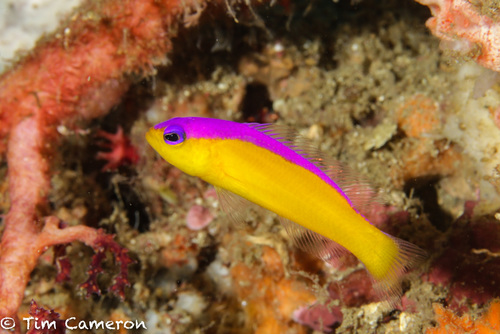
Diadem Dottyback
Pictichromis diadema
With its electric yellow body and a crown of royal purple, the Diadem Dottyback is a jewel of the tropical reef. Small but fiercely territorial, this vibrant fish brings a splash of neon color to the underwater crevices of the Western Pacific.
Quick Identification
Size
A small reef fish reaching up to 6 cm (2.4 inches) in total length.
Colors
Bicolor pattern featuring a vibrant neon yellow lower body and a striking magenta-purple stripe running along the dorsal ridge from the snout to the tail.
Key Features
- Vivid yellow lower body and belly
- Solid magenta or purple stripe across the top of the head and back
- Large eyes relative to its slender, elongated body
When You’ll See Them
Geographic range
Where Does the Diadem Dottyback Live?
The Diadem Dottyback is a native resident of the tropical Western Central Pacific. Its primary range is concentrated within the Coral Triangle, particularly around the islands of the Philippines, Indonesia, and Malaysia. It is also commonly sighted in the coastal waters of Vietnam and Thailand, thriving in warm, stable marine environments where coral biodiversity is high.
Basemap © OpenStreetMap contributors
Behavior
The Diadem Dottyback is a remarkably territorial and spirited fish that belies its small size. Often found darting through the complex architecture of coral reefs, this species is highly solitary and spends much of its time guarding a specific crevice or 'home base.' They are known for their jerky, rapid swimming style, frequently pausing to hover and survey their surroundings before retreating into safety at the slightest hint of danger.
Despite being a favorite in the aquarium trade, in the wild, they are formidable predators of smaller invertebrates. They exhibit bold behavior toward other fish that wander into their territory, often engaging in aggressive displays or nipping to drive away intruders. While they are not schooling fish, they are frequently seen peeking out from the protection of branching corals or rocky overhangs during the day.
EverydayEarth exclusive
Camera Tips
To capture the Diadem Dottyback on an underwater camera, placement is everything. These fish are 'structure-oriented,' meaning they rarely venture more than a few inches away from the safety of a coral head or a rocky crevice. Position your camera on a weighted tripod or a stable reef ledge facing a cluster of branching Acropora or Pocillopora corals. Angle the lens slightly upward or toward the entrance of a small cave to catch the fish as it emerges to patrol its territory.
Because the Diadem Dottyback is small and extremely fast, you should use a camera capable of high-frame-rate recording (at least 60 or 120 fps). This allows you to slow down the footage in post-production to appreciate their sudden, twitchy movements. If you are using a triggered trail-style underwater camera, ensure the sensor sensitivity is set to high, as their small body mass may not always trigger lower-sensitivity infrared sensors.
Lighting is the biggest challenge when photographing this species. In depths below 10 meters, the vibrant purple and yellow colors will look dull and grayish due to the loss of red light. Use powerful external video lights or a red filter on your lens to bring back the 'pop' of their neon coloration. The best time for recording is during mid-day when the sun is directly overhead, providing maximum natural light penetration through the water column.
While we don't recommend artificial baiting in sensitive reef environments, you can attract their attention by looking for areas where cleaning shrimp are present. Diadem Dottybacks often frequent these 'cleaning stations' or areas with high concentrations of tiny crustaceans. Be patient and keep the camera still; once the fish becomes accustomed to the camera's presence, it will often treat the device as part of the reef and resume its normal, bold behavior.
Similar Species
Species that look similar or are commonly confused with Diadem Dottyback.
Frequently Asked Questions
Record Diadem Dottyback at your habitat
Connect a camera to start building your own species record — AI identifies every visitor automatically.