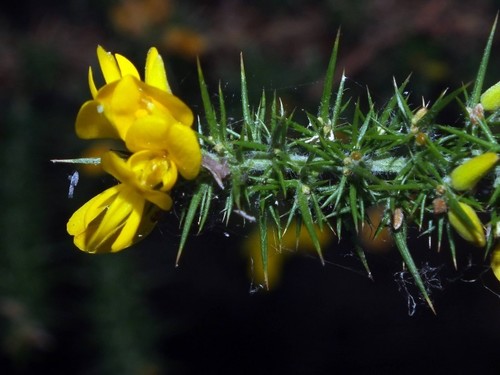
Dwarf Gorse
Ulex minor
A resilient survivor of the windswept heath, Dwarf Gorse brings a golden glow to the landscape just as summer begins to fade. This spiny sanctuary is a vital home for rare birds and delicate butterflies.
Quick Identification
Size
Height of 10–100 cm (4–39 inches); spread of up to 1 metre (3.3 feet)
Colors
Dark, rich green stems and spines; vibrant golden-yellow flowers; dark brown seed pods
Key Features
- Low-growing, often prostrate or decumbent habit
- Slender, soft-looking spines usually under 1 cm long
- Primary flowering season occurs in late summer and autumn
When You’ll See Them
Geographic range
Where Does the Dwarf Gorse Live?
Native to the temperate Atlantic regions of Western Europe, Dwarf Gorse is a specialist of lowland coastal and near-coastal environments. Its core range is concentrated in eastern and southern England, particularly across the famous heathlands of Dorset, Hampshire, and Surrey. Beyond the British Isles, it thrives across the Channel in the heathland fragments of France, Spain, and Portugal, following the maritime climate where winters are relatively mild.
Basemap © OpenStreetMap contributors
Behavior
Dwarf Gorse is a hardy, evergreen shrub that plays a foundational role in lowland heathland ecosystems. Unlike its taller relative, the Common Gorse, this species maintains a low profile, often hugging the ground or weaving through other heathland plants like heather. It is a nitrogen-fixer, meaning it has a symbiotic relationship with soil bacteria that allows it to thrive in the nutrient-poor, acidic soils where other plants struggle.
As a 'pioneer' species, it is highly adapted to fire-prone environments. Its seeds are fire-resistant and often germinate more successfully after a heathland burn, allowing the species to quickly recolonize disturbed ground. For humans and wildlife, it provides a dense, protective thicket that remains green throughout the harsh winter months, offering a constant source of shelter.
EverydayEarth exclusive
Camera Tips
When using an AI-powered camera like those from EverydayEarth, think of Dwarf Gorse as a 'wildlife stage' rather than just a botanical subject. Because it stays low to the ground, position your camera at a low angle—no more than 30 cm (12 inches) off the ground—to capture the small birds and reptiles that use the plant for cover. Aim the lens at a patch that is currently in bloom (late summer) to increase your chances of capturing insect activity.
This plant is a magnet for specific birds like the Stonechat or the rare Dartford Warbler, which often perch on the highest spines of the gorse to survey their territory. If you are targeting these birds, set your camera back about 2-3 metres with a clear line of sight to the top of the bush. Use a fast shutter speed or high-sensitivity motion trigger, as these birds move quickly and sporadically.
For macro enthusiasts, Dwarf Gorse offers a fantastic opportunity for time-lapse photography. Because it flowers when most other plants are fading (late summer and autumn), you can capture the opening of the golden pea-like flowers. Ensure your camera is mounted on a very stable stake, as heathland winds can cause significant vibration. Early morning light provides the best color saturation for the deep yellow petals against the dark green spines.
Similar Species
Species that look similar or are commonly confused with Dwarf Gorse.
Frequently Asked Questions
Record Dwarf Gorse at your habitat
Connect a camera to start building your own species record — AI identifies every visitor automatically.