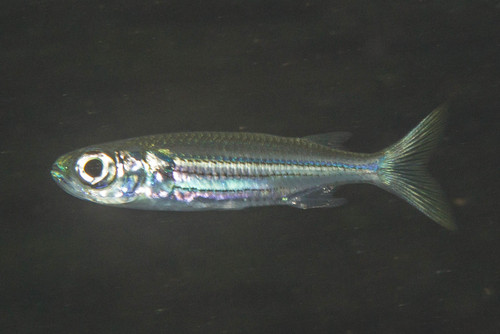
Endracht Hardyhead
Atherinomorus endrachtensis
A shimmering jewel of the Indo-Pacific shallows, the Endracht Hardyhead moves in spectacular, coordinated schools. These slender, silvery fish are essential residents of our mangroves and coastal estuaries.
Quick Identification
Size
5-9 cm (2-3.5 inches) in length; maximum recorded length is approximately 12 cm (4.7 inches)
Colors
Silvery-white underside with a translucent greenish or olive back; a brilliant silver-blue mid-lateral stripe often accented with fine black dots
Key Features
- Slender, elongated silvery body
- Prominent mid-lateral stripe with a row of small dark spots
- Two widely separated dorsal fins on the back
- Large eyes and a small, upward-tilted mouth
When You’ll See Them
Geographic range
Where Does the Endracht Hardyhead Live?
Native to the tropical and subtropical regions of the Indo-West Pacific, the Endracht Hardyhead is primarily found along the northern half of Australia. Its range extends from the Exmouth Gulf in Western Australia, across the Northern Territory, and down to the Gladstone region of Queensland. Beyond Australia, it is commonly found in the coastal waters of New Guinea and throughout the Indonesian archipelago.
Basemap © OpenStreetMap contributors
Behavior
The Endracht Hardyhead is a highly social, schooling fish that spends the majority of its life in the upper layers of the water column. These schools can range from a few dozen individuals to massive shimmering clouds containing thousands of fish. By staying in tight groups, they utilize 'the confusion effect' to protect themselves from predators like predatory fish, sea snakes, and diving birds.
These fish are extremely sensitive to tidal movements. In estuarine environments, they are known to follow the rising tide into mangrove forests and shallow mudflats to forage, retreating back to deeper channels or seagrass beds as the tide ebbs. While they are generally shy of large moving objects, they can become quite bold around stationary structures like docks and piers where food might be abundant.
EverydayEarth exclusive
Camera Tips
To capture high-quality footage of the Endracht Hardyhead, you will need a specialized underwater housing for your AI camera or a waterproof action camera mounted on a weighted stationary rig. Because these fish are surface dwellers, position your camera at a shallow depth—between 0.5 and 1 meter—facing slightly upward or toward a structure like a pier piling or mangrove root. This placement takes advantage of the Hardyhead's natural tendency to congregate near vertical cover.
Lighting is the most critical factor for these silvery fish. Aim to record during mid-morning or mid-afternoon when the sun is at an angle; this creates a beautiful 'shimmer' effect on their scales. Avoid high noon, as the vertical light can cause harsh glares that confuse AI detection models. If you are filming in a backyard canal or from a private dock, placing a small, diffuse white light near the water's surface at night can attract the plankton they eat, bringing the school directly into your camera's field of view.
While they are naturally curious, you can encourage a school to linger in front of the lens by using a 'chum' lure. Place a small amount of finely ground fish meal or soaked breadcrumbs inside a fine-mesh bag and tether it just above the camera. The scent and small particles drifting in the current will trigger a feeding frenzy, keeping the school tightly packed and stationary enough for the camera to capture clear, identifiable frames. Ensure your camera is set to a high frame rate (at least 60fps) to handle their quick, darting movements.
Similar Species
Species that look similar or are commonly confused with Endracht Hardyhead.
Frequently Asked Questions
Record Endracht Hardyhead at your habitat
Connect a camera to start building your own species record — AI identifies every visitor automatically.