European Eel
Anguilla anguilla
A master of transformation and a world-class traveler, the European Eel lives a secret life in our waterways. This critically endangered species completes an epic 6,000km journey from the depths of the Atlantic to reach our backyards.
Quick Identification
Size
Typically 60–80 cm (24–31 in), but can reach 1.5 m (5 ft); weight ranges from 1–6 kg (2.2–13.2 lbs).
Colors
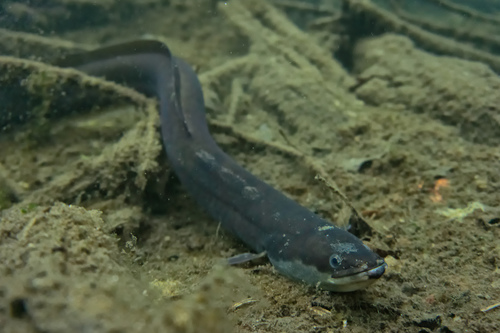
Changes with age: transparent as 'glass eels', brownish-green as 'yellow eels', and metallic silver with dark backs as 'silver eels'.
Key Features
- Elongated snake-like body
- Continuous fin fringe along the back and tail
- Protruding lower jaw
- Tiny, scale-less appearance (scales are deeply embedded)
When You’ll See Them
Geographic range
Where Does the European Eel Live?
Native to the coastal and inland waters of Europe and North Africa, the European Eel has one of the most expansive ranges of any migratory fish. They are found in every country from the northern tip of Scandinavia and Iceland down to the Mediterranean and Black Seas, including the Nile River in Egypt. While they originate in the remote Sargasso Sea, they spend the majority of their life cycle in the river systems of the United Kingdom, France, Germany, and the Iberian Peninsula.
Basemap © OpenStreetMap contributors
Behavior
The European Eel is one of nature’s most mysterious travelers. Most of their lives are spent in freshwater rivers and lakes, where they are primarily nocturnal, hiding in mud or under stones during the day to avoid predators. They are opportunistic hunters, using a highly developed sense of smell to locate food in murky waters. Remarkably, they can survive for short periods out of water and are known to slither across damp grass on rainy nights to reach isolated ponds or move between waterways.
Their life cycle is a legendary biological enigma; they are born in the Sargasso Sea near Bermuda and drift for years across the Atlantic to reach European coasts. After spending up to 20 years maturing in freshwater, they undergo a final transformation into 'silver eels,' stopping all feeding to begin a grueling 6,000-kilometer return journey to the ocean depths to spawn once and die. Because they are rarely seen during the day, they often go unnoticed by residents living right next to their habitats.
EverydayEarth exclusive
Camera Tips
Capturing a European Eel requires a specialized setup, as they are almost entirely aquatic and nocturnal. If you have a stream or pond on your property, the most effective method is using a waterproof action camera or a dedicated underwater trail camera. Position the camera in shallow water (under 30cm) near a muddy bank or submerged logs where eels like to hide. Ensure the camera is weighted down or secured to a heavy stone to prevent it from drifting.
For those using standard backyard trail cameras, you can occasionally catch eels 'land-trekking' during exceptionally wet or humid nights, especially in the autumn. Aim your camera at damp, grassy paths between two bodies of water. Use the highest sensitivity setting and ensure your camera's infrared (IR) flash is active, as these fish are highly sensitive to white light and will flee from standard flash units.
To attract an eel into your camera's field of view, a small mesh bag filled with oily fish (like sardines) or chopped worms can be placed just in front of the lens. Eels have an incredible sense of smell and will follow the scent trail even in complete darkness. Late summer and early autumn are the best times for filming, as this is when 'silver eels' begin their downstream migration and are most active.
Similar Species
Species that look similar or are commonly confused with European Eel.
Frequently Asked Questions
Record European Eel at your habitat
Connect a camera to start building your own species record — AI identifies every visitor automatically.