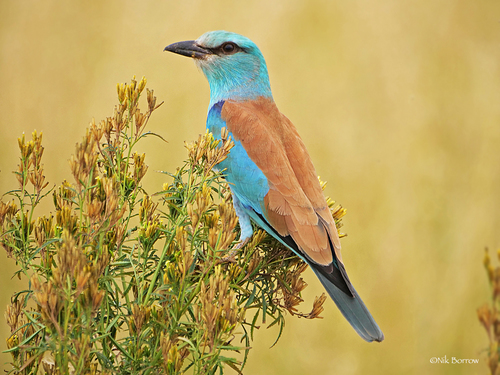
European Roller
Coracias garrulus
A masterpiece of turquoise and cinnamon, the European Roller is one of the most colorful birds in the Northern Hemisphere. Known for its acrobatic 'rolling' displays and long-distance migrations, it is a crown jewel for any backyard wildlife observer.
Quick Identification
Size
Length: 29-32 cm (11.4-12.6 in); Wingspan: 52-58 cm (20.5-22.8 in); Weight: 110-190 g (3.9-6.7 oz)
Colors
Brilliant turquoise-blue head, neck, and underparts; warm cinnamon-brown back; azure blue wing coverts with dark primary feathers; black bill.
Key Features
- Stunning azure-blue and cinnamon plumage
- Stocky build with a large, powerful head
- Thick black bill with a slight hook
- Distinctive 'rolling' aerial display flight
When You’ll See Them
Geographic range
Where Does the European Roller Live?
Native to a vast stretch of the Palearctic, the European Roller breeds across Southern and Eastern Europe, North Africa, and Western to Central Asia. Its core breeding range includes countries like Spain, Hungary, Turkey, and Russia, extending east into Kazakhstan. As a highly migratory species, it spends the northern winter in the dry wooded savannas and bushy plains of sub-Saharan Africa, particularly in Eastern and Southern Africa.
Basemap © OpenStreetMap contributors
Behavior
The European Roller is a quintessential 'sit-and-wait' predator. It spends much of its day perched conspicuously on high vantage points like power lines, dead branches, or fence posts, scanning the ground for large insects. Once it spots prey, it performs a rapid, controlled dive, snatches the target, and often returns to the same perch to consume it.
During the breeding season, they are famous for their namesake 'rolling' flight maneuvers. Males perform spectacular aerial displays involving steep dives and barrel rolls, accompanied by harsh, croaking calls to attract mates and defend their territory. Though they are fiercely territorial when nesting, they are generally solitary during their long-distance migrations between Europe and Africa.
EverydayEarth exclusive
Camera Tips
To capture the European Roller on your trail camera, focus on high-visibility perches. These birds love isolated dead branches or wooden fence posts that offer a 360-degree view of open, grassy hunting grounds. Mount your camera 5 to 10 feet away from such a perch, aiming for a side-profile angle. Because they are sit-and-wait hunters, they may stay still for long periods, so set your camera to take both a high-resolution photo and a short video clip to capture the sudden, explosive movement when they dive for prey.
If you are in a breeding area, European Rollers are secondary cavity nesters and will readily use large nest boxes (similar to those for Kestrels or Owls). Positioning a camera near the entrance of a nest box is the single best way to get close-up, high-quality footage. Ensure the camera is positioned to the side of the entrance to avoid overexposure from the IR flash at night and to capture the parents arriving with large beetles or lizards in their beaks.
Rollers are sun-loving birds, and their iridescent blue feathers look most spectacular in direct light. Place your camera in an area that gets full morning or late afternoon sun. Avoid placing cameras in deep, shaded forest interiors, as Rollers generally avoid dense canopy. If you want to encourage them to visit a specific spot, maintain a patch of short or mowed grass near a perch, which makes it easier for them to spot the large insects they favor. They are most active during the warmest parts of the day when insect activity is at its peak.
Similar Species
Species that look similar or are commonly confused with European Roller.
Frequently Asked Questions
Record European Roller at your habitat
Connect a camera to start building your own species record — AI identifies every visitor automatically.