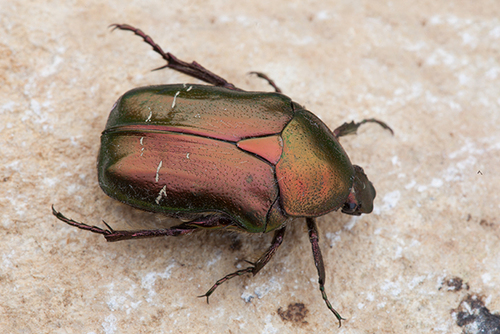
European Rose Chafer
Cetonia aurata
A shimmering emerald of the garden, the European Rose Chafer is a master of the sun. These iridescent pollinators are famous for their metallic armor and their unique ability to fly with their wing cases closed.
Quick Identification
Size
14–20 mm (0.55–0.79 inches) in length
Colors
Brilliant metallic emerald green upper side, often with coppery, bronze, or violet reflections; coppery-bronze underside; irregular white horizontal streaks on the wing cases
Key Features
- Metallic iridescent green body
- Distinctive V-shaped scutellum between wing cases
- Irregular white horizontal markings on elytra
- Flies with wing cases (elytra) closed
When You’ll See Them
Geographic range
Where Does the European Rose Chafer Live?
The European Rose Chafer is native to the Palearctic region, spanning across almost the entire European continent. Its core range extends from the United Kingdom and Scandinavia in the north, down to the Mediterranean, and stretches eastward through central Asia as far as the mountains of Kazakhstan and parts of Siberia. While it is most populous in temperate Europe, it is a highly adaptable species found wherever suitable flowering plants and rotting wood for larvae are present.
Basemap © OpenStreetMap contributors
Behavior
The European Rose Chafer is a sun-loving beetle known for its clumsy, heavy flight and its habit of basking on large, open flowers during the warmest parts of the day. Unlike most beetles, which must lift their hard wing cases (elytra) to fly, the Rose Chafer has a unique notch at the side of its elytra that allows its flight wings to deploy while the armor remains closed. This makes them appear more aerodynamic and 'bee-like' when in the air, even if their landings are often uncoordinated.
These beetles are primarily solitary but can often be found in small groups where food is abundant, such as on a single rose bush or elderberry cluster. They are gentle giants of the insect world and do not bite or sting humans. While they are sometimes considered a minor garden pest because they eat flower petals, they are also significant pollinators, moving from bloom to bloom covered in pollen. Their life cycle is long, with larvae spending two to three years in compost or rotting wood before emerging as the jewel-like adults seen in summer.
EverydayEarth exclusive
Camera Tips
Capturing the European Rose Chafer with an AI-powered camera requires a focus on bright, sun-drenched locations, as these beetles are strictly diurnal and love the heat. Position your camera near large, nectar-rich flowers like roses, peonies, or elderflowers. Because these beetles are relatively small, use a camera with a macro lens or a very short minimum focal distance (10-30cm). If you are using a standard trail camera, mount it as close to the flower head as possible, ensuring the lens is clean to capture the metallic luster of the beetle's shell.
To encourage these 'living jewels' to visit a specific spot for your camera, you can use a sweet lure. A small dish of overripe, fermenting fruit like bananas, peaches, or plums placed in a sunny spot is often irresistible to Rose Chafers. This will keep them stationary for much longer than a flower would, allowing your AI camera to trigger multiple high-quality frames and capture the intricate white markings on their elytra.
Lighting is the most critical factor for this species. Their color is 'structural,' meaning it is created by light reflecting off microscopic structures in their shell. To capture the most brilliant greens and coppers, ensure your camera is positioned so the sun is behind the lens, illuminating the beetle directly. Avoid shaded areas, as the beetle will appear dark and lose its characteristic sparkle. On bright, slightly overcast days, the soft light can help reduce harsh reflections on their metallic surface, resulting in better detail in your photos.
Similar Species
Species that look similar or are commonly confused with European Rose Chafer.
Frequently Asked Questions
Record European Rose Chafer at your habitat
Connect a camera to start building your own species record — AI identifies every visitor automatically.