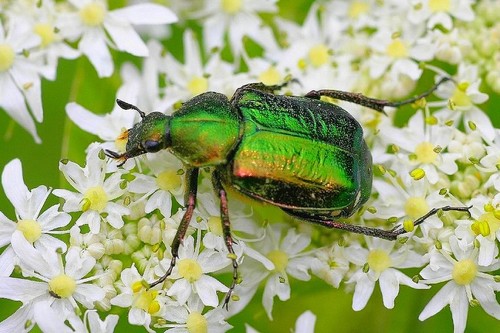
Noble Chafer
Gnorimus nobilis
A rare and shimmering emerald of the insect world, the Noble Chafer is a prized find for any nature enthusiast. This iridescent beetle is a specialist of ancient orchards, glimmering like a jewel as it dances between summer blossoms.
Quick Identification
Size
17–22 mm (0.67–0.87 inches) in length
Colors
Metallic iridescent green, occasionally showing bronze or golden hues; scattered small, irregular white or cream spots on the wing cases
Key Features
- Brilliant metallic green iridescence
- White flecked markings on wing cases (elytra)
- Distinctive 'scalloped' or notched edge on the side of the thorax
- Associated specifically with old fruit trees
When You’ll See Them
Behavior
The Noble Chafer is a sun-loving beetle that spends the vast majority of its life out of sight. As larvae, they live for two to three years deep within the decaying heartwood or 'wood mold' of old, hollow fruit trees. Because they depend on these specific micro-habitats, they are considered an 'indicator species' for high-quality, veteran orchards and ancient parklands. They are remarkably elusive, often staying high in the canopy or tucked away in tree cavities.
When they emerge as adults in the early summer, they have a very short window of roughly four to six weeks to find a mate. During this time, they are active on warm, still days, visiting flowers to fuel up on nectar and pollen. While they are capable flyers, their flight is often loud and heavy, resembling a large, metallic bumblebee. Despite their somewhat formidable appearance, they are entirely harmless to humans and are prized by gardeners as a sign of a healthy ecosystem.
EverydayEarth exclusive
Camera Tips
Capturing a Noble Chafer on camera requires a specialized approach because of their small size and specific habits. Most standard trail cameras are designed for larger mammals and have a minimum focal distance that is too long for a 20mm beetle. To get a clear shot, you will likely need a camera with a macro mode or a 'close-up' lens attachment. Focus your efforts on 'floral hotspots'—specifically flat, white flowering plants like Elder, Meadowsweet, or Hogweed that are located within 50 yards of old fruit trees.
Mount your camera on a garden stake or a flexible tripod to bring the lens level with the flower heads, typically 3 to 5 feet off the ground. The angle is vital: aim for a 45-degree downward angle onto the flower cluster. Because these beetles are highly iridescent, direct sunlight is your best friend. Position the camera so the sun is behind it, illuminating the beetle's metallic shell. This will make the green 'sparkle' against the white petals, making it much easier for AI software to identify the movement.
In terms of settings, avoid relying solely on PIR motion triggers, which can struggle to detect small insects. Instead, use 'Time-Lapse' mode during the peak heat of the day (11 AM to 3 PM). Set the interval to one photo every 10-15 seconds. If your camera supports high-speed video, 60fps is ideal for capturing their clumsy take-offs and landings. If you’re using a camera with adjustable exposure, slightly underexpose the shot (-0.5 or -1.0 EV) to prevent the sun's reflection on their metallic backs from blowing out the detail.
While you shouldn't use traditional bait, you can 'lure' them by ensuring your garden has a water source and plenty of their favorite white flowers. If you have an old fruit tree with a visible rot hole or 'hollow,' place a camera nearby in late June. You might catch a once-in-a-lifetime shot of an adult emerging from its larval home. Be patient; these are rare insects, but the reward of a high-definition image of this 'living jewel' is worth the effort.
Similar Species
Species that look similar or are commonly confused with Noble Chafer.
Frequently Asked Questions
Record Noble Chafer at your habitat
Connect a camera to start building your own species record — AI identifies every visitor automatically.