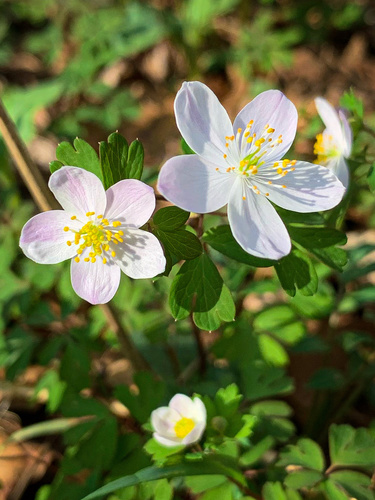
false rue anemone
Enemion biternatum
A delicate harbinger of spring, the False Rue Anemone paints the forest floor in stars of white before the trees even wake. This woodland ephemeral is a master of timing, making it a favorite for early-season nature photographers and pollinators alike.
Quick Identification
Size
Stands 10–30 cm (4–12 inches) tall; flowers are approximately 1.5 cm (0.6 inches) in diameter.
Colors
Brilliant white flowers with yellow-tipped centers (stamens) and vibrant green, lobed foliage.
Key Features
- Five white petal-like sepals surrounding a cluster of yellow stamens
- Leaves divided into three leaflets, each with two or three lobes
- Slender, often reddish-tinted stems
- Forms low-growing colonies on the forest floor
When You’ll See Them
Behavior
The false rue anemone is a true spring ephemeral, meaning its entire above-ground life cycle occurs in the brief window between the ground thawing and the forest canopy leafing out. It emerges early to take advantage of the direct sunlight reaching the forest floor, quickly blooming and setting seed before the shade of the tall trees becomes too dense.
While it may look delicate, this plant is quite resilient, spreading through underground rhizomes to create lush, star-sprinkled carpets. It doesn't move in the traditional sense, but its flowers are phototropic, opening wide during sunny hours to welcome early-season pollinators like solitary bees and hoverflies, and nodding or closing slightly during rain or at night to protect their pollen.
EverydayEarth exclusive
Camera Tips
Capturing the false rue anemone on a trail camera requires a shift from motion-triggering to time-lapse mode. Because these plants don't move fast enough to trigger a standard PIR sensor, set your camera to take a photo every 15 to 30 minutes during daylight hours. This will allow you to create a stunning time-lapse of the 'wake-up' cycle, showing the flowers opening as the sun hits the forest floor and tracking their brief but beautiful life cycle over several weeks.
For the best visual results, mount your camera very low to the ground—no more than 6 to 10 inches high. Use a small tripod or a ground stake rather than a tree strap to get that 'bug's-eye view' that makes these small blooms look majestic. Ensure the area directly in front of the lens is clear of stray leaves or tall grass that might blur the foreground or cause overexposure if the flash fires.
Since these flowers are a magnet for early spring pollinators, you can also use your camera's hybrid mode (photo + video) if it has a high-sensitivity trigger. Place the camera near a dense patch of blooms on a sunny afternoon. You are likely to catch rare footage of early-season hoverflies, mining bees, and even the occasional overwintering butterfly stopping for a drink of nectar. These interactions are often too fast for the human eye but look incredible in slow-motion video.
Pay attention to the light. The white sepals of the false rue anemone are highly reflective and can easily 'blow out' or look like white blobs in direct, harsh sunlight. If possible, position your camera so it faces north or south to avoid direct east/west glare, or set it up under a partial canopy where the light is filtered. This preserves the delicate detail of the yellow stamens and the subtle veining on the white sepals.
Similar Species
Species that look similar or are commonly confused with false rue anemone.
Frequently Asked Questions
Record false rue anemone at your habitat
Connect a camera to start building your own species record — AI identifies every visitor automatically.