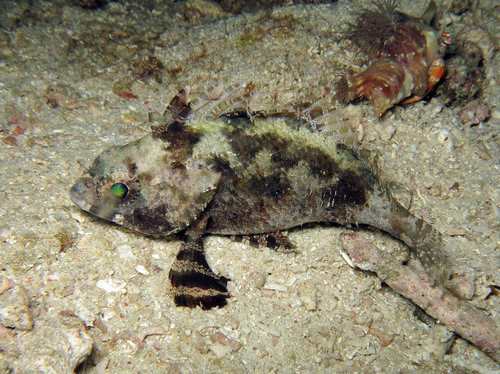
False Scorpionfish
Centrogenys vaigiensis
Meet the ultimate underwater imposter! The False Scorpionfish uses stunning mimicry and expert camouflage to hide in plain sight across Indo-Pacific reefs.
Quick Identification
Size
Typically 10-15 cm (4-6 in), but can reach a maximum length of 25 cm (9.8 in).
Colors
Mottled grey, tan, or brown with dark blotches; fins often feature intricate spots and transparent sections.
Key Features
- Mimics venomous true scorpionfish
- Dorsal fin with 13-14 spines
- Protruding lower jaw
- Excellent camouflage matching rocky or sandy substrates
When You’ll See Them
Geographic range
Where Does the False Scorpionfish Live?
Native to the tropical Indo-West Pacific, the False Scorpionfish thrives in warm coastal waters. Its range extends from the Nicobar Islands in the west to New Guinea in the east, reaching as far north as Japan's Ryukyu Islands and stretching south to the northern coasts of Australia. It is most commonly encountered in the diverse marine ecosystems of Southeast Asia, including the Philippines and Indonesia.
Basemap © OpenStreetMap contributors
Behavior
The False Scorpionfish is a master of mimicry, evolving to look almost identical to the highly venomous true scorpionfish (Scorpaenidae). Despite its intimidating appearance, it lacks the dangerous venom of its look-alikes. It is a benthic species, meaning it spends most of its time resting on the sea floor, perfectly still, waiting for an opportunity to strike at passing prey.
These fish are generally solitary and highly territorial. They rely on their cryptic coloration to remain invisible to both predators and prey. Because they are docile and slow-moving, they are often overlooked by divers and snorkelers unless they happen to dart away when disturbed.
EverydayEarth exclusive
Camera Tips
Capturing a False Scorpionfish on camera requires a specialized underwater setup, such as a waterproof trail camera or a stationary GoPro rig. For those living near tropical coastlines or docks, focus your efforts on shallow tide pools or the edges of seagrass beds during low tide when the water is calmest and visibility is at its peak.
Mount your camera on a weighted base or a small tripod and wedge it into a rocky crevice facing a patch of open sand or rubble. Because these fish are ambush predators, they will often return to the same 'waiting spot' multiple times. Patience is key; set your camera to record short video bursts or high-resolution time-lapse photos to catch the subtle movements of the fish adjusting its position.
Natural sunlight is your best friend for underwater photography. Aim to capture footage between 10 AM and 2 PM when the sun is directly overhead to minimize surface reflection and maximize color penetration. While baiting isn't strictly necessary, placing a crushed piece of seafood nearby may attract the small crustaceans that the False Scorpionfish hunts, potentially drawing the fish into your camera's field of view.
Similar Species
Species that look similar or are commonly confused with False Scorpionfish.
Frequently Asked Questions
Record False Scorpionfish at your habitat
Connect a camera to start building your own species record — AI identifies every visitor automatically.