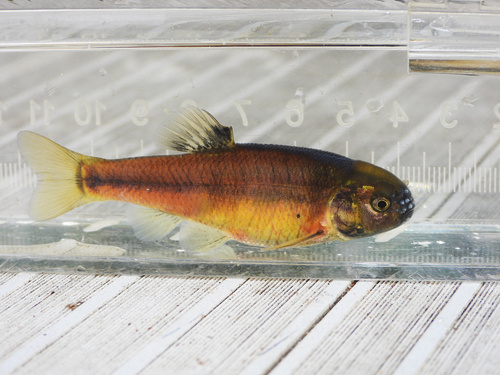
Fathead Minnow
Pimephales promelas
The ultimate survivor of the freshwater world, the Fathead Minnow is a master of adaptation. Whether guarding a nest or schooling for safety, these little fish offer a fascinating glimpse into aquatic life right in your own backyard pond.
Quick Identification
Size
5-10 cm (2-4 inches) in length; weight typically ranges from 2-5 grams
Colors
Dull olive-grey or silvery-tan with a dark lateral stripe; breeding males turn dark charcoal to black with two light vertical bars and white bumps on the snout
Key Features
- Blunt, rounded 'fat' head profile
- Dark spot at the front of the dorsal fin
- Small, upward-slanted mouth
- Males develop a spongy pad on the back of the neck during breeding
When You’ll See Them
Geographic range
Where Does the Fathead Minnow Live?
The Fathead Minnow is native to the North American continent, boasting one of the widest distributions of any freshwater fish in the region. Its core range stretches from the Northwest Territories in central Canada, sweeping down through the United States between the Rocky Mountains and the Appalachians, and extending as far south as Chihuahua, Mexico. While naturally found in the central and eastern U.S., they have been widely introduced to the Atlantic and Pacific drainage basins due to their popularity as bait fish and their use in mosquito control.
Basemap © OpenStreetMap contributors
Behavior
The Fathead Minnow is a highly social and resilient schooling fish known for its incredible tolerance to poor water conditions. They are famous in the scientific community for producing 'Schreckstoff' (alarm substance), a chemical released from the skin when a fish is injured that alerts the rest of the school to nearby predators. This survival mechanism makes them one of the most successful small fish in North American waterways.
During the breeding season, their behavior becomes surprisingly complex. Males become highly territorial, selecting a site under a flat rock or lily pad which they meticulously clean with their 'spongy pad.' They are dedicated fathers, guarding the eggs from predators and fanning them with their fins to ensure they receive enough oxygen until they hatch. In backyard ponds, they are often seen darting in unison, creating silver flashes as they change direction.
EverydayEarth exclusive
Camera Tips
Capturing the Fathead Minnow on camera requires an underwater setup, such as a specialized pond camera or a waterproof action camera like a GoPro mounted on a weighted tripod. To get the best footage, place your camera in shallow, still water near submerged structures like flat rocks, logs, or even PVC pipes, as these are the preferred nesting sites for males. Aim the lens horizontally at these structures from a distance of about 12 to 18 inches to ensure the fish remain in focus while they perform their natural behaviors.
To attract a school for a quick 'feeding frenzy' shot, you can use a small amount of sinking fish pellets or even crushed crackers. However, for the most interesting behavioral shots, timing is key during the spring and summer breeding season. This is when males become territorial and display their dark breeding colors and unique head tubercles. Early morning or late afternoon sun provides the best natural lighting for shallow water, though if your pond is murky, using a camera with a high-powered built-in LED can help illuminate the subject without washing out the colors.
For the best results, set your camera to a high frame rate (60fps or higher). Minnows are fast movers, and high-speed recording allows you to slow down the footage to see the intricate details of their social interactions and the male's nest-cleaning process. Ensure your camera is set to a wide-angle view to capture the movement of the entire school, and if you're using a motion-activated trigger, adjust the sensitivity to high, as these small fish may not trigger standard PIR sensors through water.
Similar Species
Species that look similar or are commonly confused with Fathead Minnow.
Frequently Asked Questions
Record Fathead Minnow at your habitat
Connect a camera to start building your own species record — AI identifies every visitor automatically.